
Contents
Short answer: barefoot shoes are not a treatment for Morton's neuroma, but their wide toe box and flat sole avoid the squeeze and forefoot pressure that tight, heeled shoes add. Roomier footwear is a common first step, yet evidence for footwear on its own is limited; a 2019 review found the strongest evidence for injections and manipulation (Matthews 2019). Some people simply find wider shoes more comfortable.
 Mens Oxford in Black Full-Grain Leather | Zero Drop Barefoot, Toe-Spreading, Genuine Leather
View product
Mens Oxford in Black Full-Grain Leather | Zero Drop Barefoot, Toe-Spreading, Genuine Leather
View product
What is Morton's neuroma?
Morton's neuroma is a thickening of the tissue around a nerve between the toes, most often between the third and fourth toes. Despite the name, it is not a tumour. Common symptoms include:
- a sharp, burning or shooting pain in the ball of the foot;
- tingling or numbness that runs into the toes;
- the feeling of standing on a pebble or a fold in your sock;
- pain that gets worse in tight shoes and eases when you take them off.
 Mens Oxford in Black Full-Grain Leather | Zero Drop Barefoot, Toe-Spreading, Genuine Leather
View product
Mens Oxford in Black Full-Grain Leather | Zero Drop Barefoot, Toe-Spreading, Genuine Leather
View product
How tight shoes can make it worse
Many everyday shoes taper at the front, pressing the toes and the long bones of the forefoot together. A raised heel tips more of your weight onto the ball of the foot, which is exactly where a neuroma sits. Many people with a neuroma notice their pain is worse in narrow or high-heeled shoes and better when they take them off.
 Mens Oxford in Black Full-Grain Leather | Zero Drop Barefoot, Toe-Spreading, Genuine Leather
View product
Mens Oxford in Black Full-Grain Leather | Zero Drop Barefoot, Toe-Spreading, Genuine Leather
View product
Are barefoot shoes good for Morton's neuroma?
They are not a medical treatment, but three features may make them more comfortable for some people:
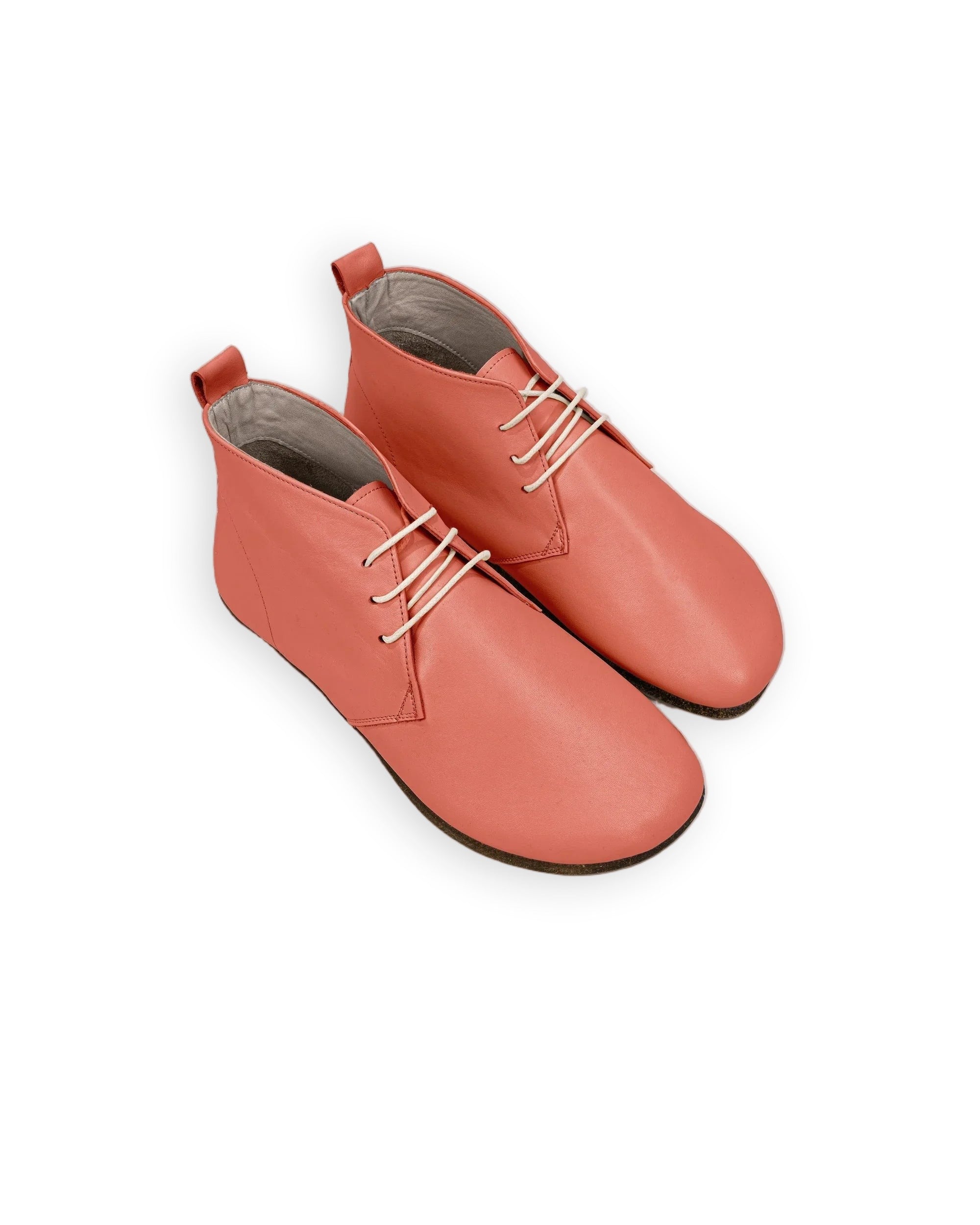
- A wide toe box: shoes with a wide toe box are widest at the toes, so your forefoot is not squeezed from the sides.
- Zero drop: heel and forefoot sit level, so the shoe does not tip extra weight forward the way a heeled shoe does. See our zero drop shoes.
- A flexible sole: a thin sole that bends with your foot.
Keep expectations realistic. A 2019 systematic review of 25 studies found that corticosteroid injection and manipulation or mobilisation had the strongest evidence for reducing pain; one trial favoured injection over footwear changes and padding, and there was no single best treatment (Matthews 2019). Roomier footwear is a sensible, low-risk first step, but evidence for footwear alone is limited.
How to switch without new aches
If you have worn cushioned, heeled shoes for years, a thin flat shoe asks more of your feet and calves. Runners who switched to minimalist shoes over ten weeks showed more signs of bone stress in the foot than those who did not (Ridge 2013), so go slowly.
- Start with an hour or two a day on flat, easy surfaces.
- Add time over several weeks and keep your old shoes in rotation.
- Ease back if you notice new or sharp pain.
- If your clinician has given you a metatarsal pad, check that the shoe has enough room for it before you switch.
Our transition guide has a week-by-week plan.
What to look for in a shoe
- A foot-shaped toe box that is widest at the tips of your toes.
- A flat, zero drop sole.
- A flexible sole that bends easily.
- A soft upper without tight seams or straps across the ball of the foot.
- Enough volume inside, especially if you use a pad or insole.
Bespoky barefoot shoes are handmade to order in our own workshops in Gaziantep and Istanbul, drawing on a four-generation shoemaking family. Each pair is made by one artisan from vegetable-tanned (chrome-free) leather on a foot-shaped last. Our fit guide shows how much room to leave.
When to see a professional
This article is general information, not medical advice. See a podiatrist, physiotherapist or doctor for a diagnosis, especially if your pain is severe, constant or getting worse, if numbness in your toes does not go away, or if you are not sure it is a neuroma, since stress fractures and other forefoot problems can feel similar. A clinician can talk you through options such as padding, injections or other care. They can tell you whether a change of footwear makes sense for you.
FAQ
Can barefoot shoes cure Morton's neuroma?
No. A shoe is not a cure. A wide, flat shoe avoids squeezing the forefoot, and some people find their symptoms bother them less in roomier shoes.
How quickly might I notice a difference?
It varies from person to person. Adapting to a thin, flat shoe can take weeks or months, and new soreness in your arches or calves during that time is usually from the transition itself.
Can I use a metatarsal pad with barefoot shoes?
Often yes, as long as the shoe has enough room for the pad without feeling tight. Ask your clinician where the pad should sit.
Should I try barefoot shoes if my pain is severe?
Talk to a healthcare professional first. They can confirm the diagnosis and advise on the safest approach for you.
Sources
- Matthews BG et al. Non-surgical interventions for Morton's neuroma: systematic review and meta-analysis. J Foot Ankle Res. 2019;12:12. PubMed 30809275
- Ridge ST et al. Foot bone marrow edema after a 10-wk transition to minimalist running shoes. Med Sci Sports Exerc. 2013. PubMed 23439417
Written by Mesut Bozkurt · Updated 2 October 2026