
Contents
Short answer: barefoot shoes are not a proven fix for shin splints, and switching to them too quickly can itself overload your lower legs. Evidence on treatments for shin splints is limited, with no clearly superior option (Teles 2026). If you want to try barefoot shoes, wait until current pain has settled and build up very gradually.
 Zero Drop Mens Sneaker | Black Full-Grain Leather, Wide Toe Box, Artisan Made
View product
Zero Drop Mens Sneaker | Black Full-Grain Leather, Wide Toe Box, Artisan Made
View product
What are shin splints?
"Shin splints" is the common name for medial tibial stress syndrome: a recurring, dull ache along the inner edge of the shinbone. It is usually linked to repeated load on the bone and the tissues attached to it rather than a single injury, and often follows a sudden change in training: more distance, harder surfaces, or a change in how your foot meets the ground, which a new type of shoe can bring.
 Zero Drop Mens Sneaker | Black Full-Grain Leather, Wide Toe Box, Artisan Made
View product
Zero Drop Mens Sneaker | Black Full-Grain Leather, Wide Toe Box, Artisan Made
View product
How shoes come into it
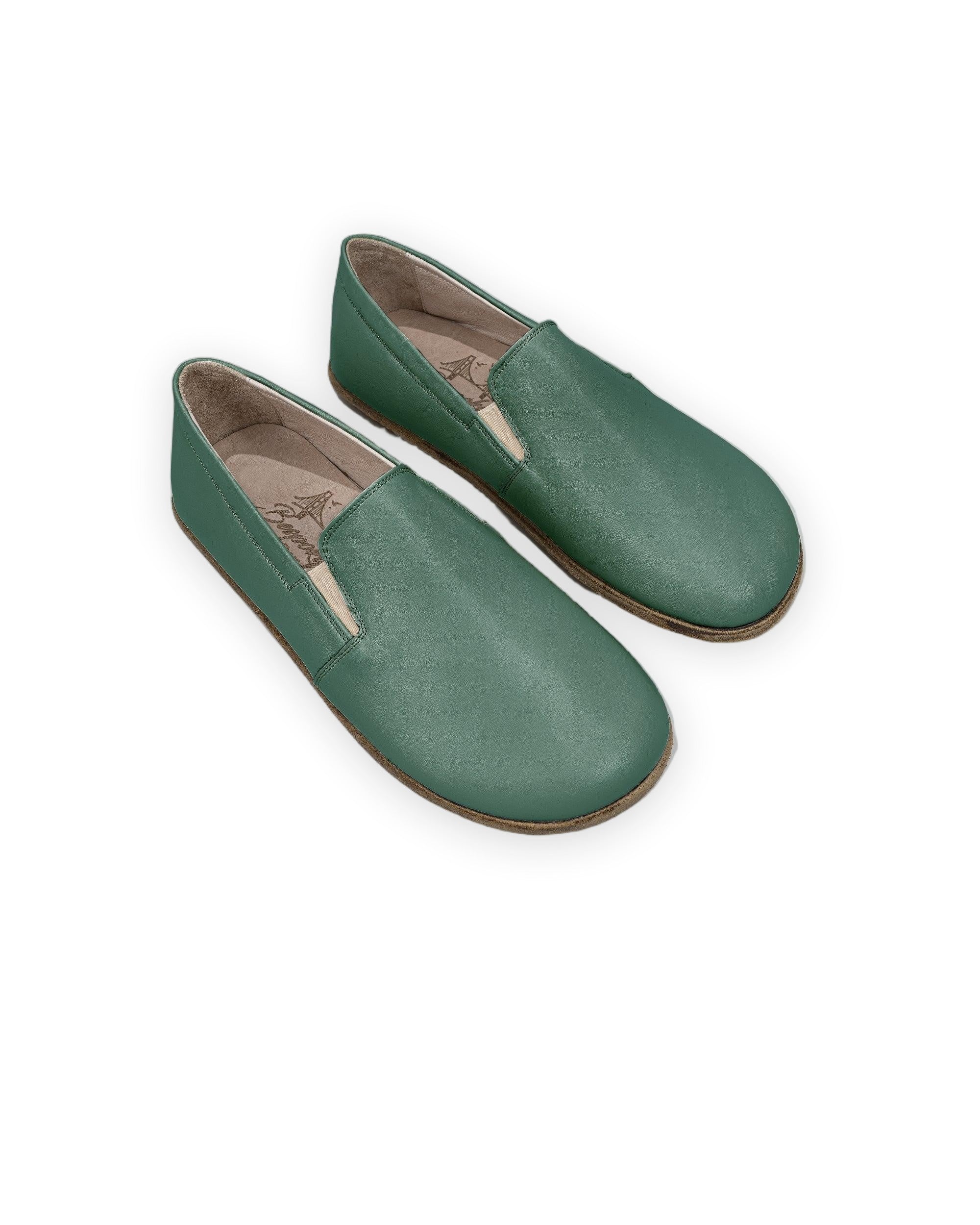
Many athletic shoes have a raised heel, plenty of cushioning and a stiff sole. Barefoot shoes have a flat, zero drop sole and bend easily, and some wearers find they land less heavily on the heel in them. Whether that changes shin splints is not known. How your body responds to any shoe is individual, and footwear is only one of many factors.
 Zero Drop Mens Sneaker | Black Full-Grain Leather, Wide Toe Box, Artisan Made
View product
Zero Drop Mens Sneaker | Black Full-Grain Leather, Wide Toe Box, Artisan Made
View product
Do barefoot shoes help shin splints?
There is no good evidence that they do. A 2026 systematic review of non-invasive treatments for this kind of shin pain in runners found only three small trials, with limited, mixed evidence and no clearly superior treatment (Teles 2026). Footwear is not a proven fix, and a new pair should not be seen as a solution for active pain.
Why a fast switch can bring on shin pain
The most common reason people get shin pain after moving to barefoot shoes is doing too much too soon. A flat, thin shoe and a different landing pattern ask more of the calf and shin muscles, and if they are not ready they can be overloaded. Runners who switched to minimalist shoes over ten weeks showed more signs of bone stress in the foot than runners who stayed in their usual shoes (Ridge 2013), a reminder that the lower leg needs time to adapt.
How to transition gradually
Every timeline is different, but a gradual approach looks like this. Our transition guide has more detail.
- Start with walking: short periods of easy activity at home or on errands. Notice how your feet, ankles and shins feel the next day.
- Increase slowly: add time only when there is no lingering soreness. Stay on familiar surfaces and add gentle calf stretches.
- Add activity carefully: once all-day walking feels easy, try short, easy jogs if you run, and keep them short.
- Keep listening: if your shins or calves are sore the next morning, cut back and progress more slowly.
What to look for in a barefoot shoe
- A foot-shaped wide toe box so your toes are not squeezed.
- A zero drop sole with no raised heel.
- A flexible sole that bends and twists easily.
- A secure fit around the midfoot and heel. Our fit guide shows how to check.
Our barefoot shoes are handmade to order in our own workshops in Gaziantep and Istanbul, drawing on a four-generation shoemaking family. Each pair is made by one artisan, in genuine, vegetable-tanned (chrome-free) leather. More background is in our guide to barefoot leather shoes.
When to see a professional
This article is general information, not medical advice. See a doctor or physiotherapist if you have sharp pain in one spot on the bone, pain that continues at rest or at night, swelling, or pain that keeps you from walking normally; these can be signs of a stress fracture. They can tell you whether a change of footwear makes sense for you.
FAQ
Can barefoot shoes cause shin splints?
Switching too quickly can overload your lower leg muscles and lead to shin pain. A slow, gradual transition lowers that risk.
Can barefoot shoes help existing shin splints?
Footwear is not a proven fix, and evidence for shin splint treatments in general is limited (Teles 2026). Let current pain settle before introducing any new footwear.
How long does the transition take?
Anywhere from a few weeks to many months, depending on your activity level and previous shoes.
Do strengthening exercises help during the transition?
Some people like adding simple calf raises and toe raises while they build up. They are not a guarantee against pain.
Sources
- Teles AI et al. Load-induced medial leg pain (shin splints) in runners: systematic review of non-invasive treatments. Phys Ther Sport. 2026;81:101962. PubMed 42462658
- Ridge ST et al. Foot bone marrow edema after a 10-wk transition to minimalist running shoes. Med Sci Sports Exerc. 2013. PubMed 23439417
Written by Mesut Bozkurt · Updated 2 October 2026