
Contents
Short answer: be careful. A flat, zero drop shoe asks more of the calf and Achilles tendon than a shoe with a raised heel, so switching quickly can make a sore tendon worse. If you have Achilles pain now, let it settle first and ask a physiotherapist before changing footwear; rehab for Achilles tendinopathy follows clinical guidelines (Martin 2018). If you do switch later, build up very slowly.
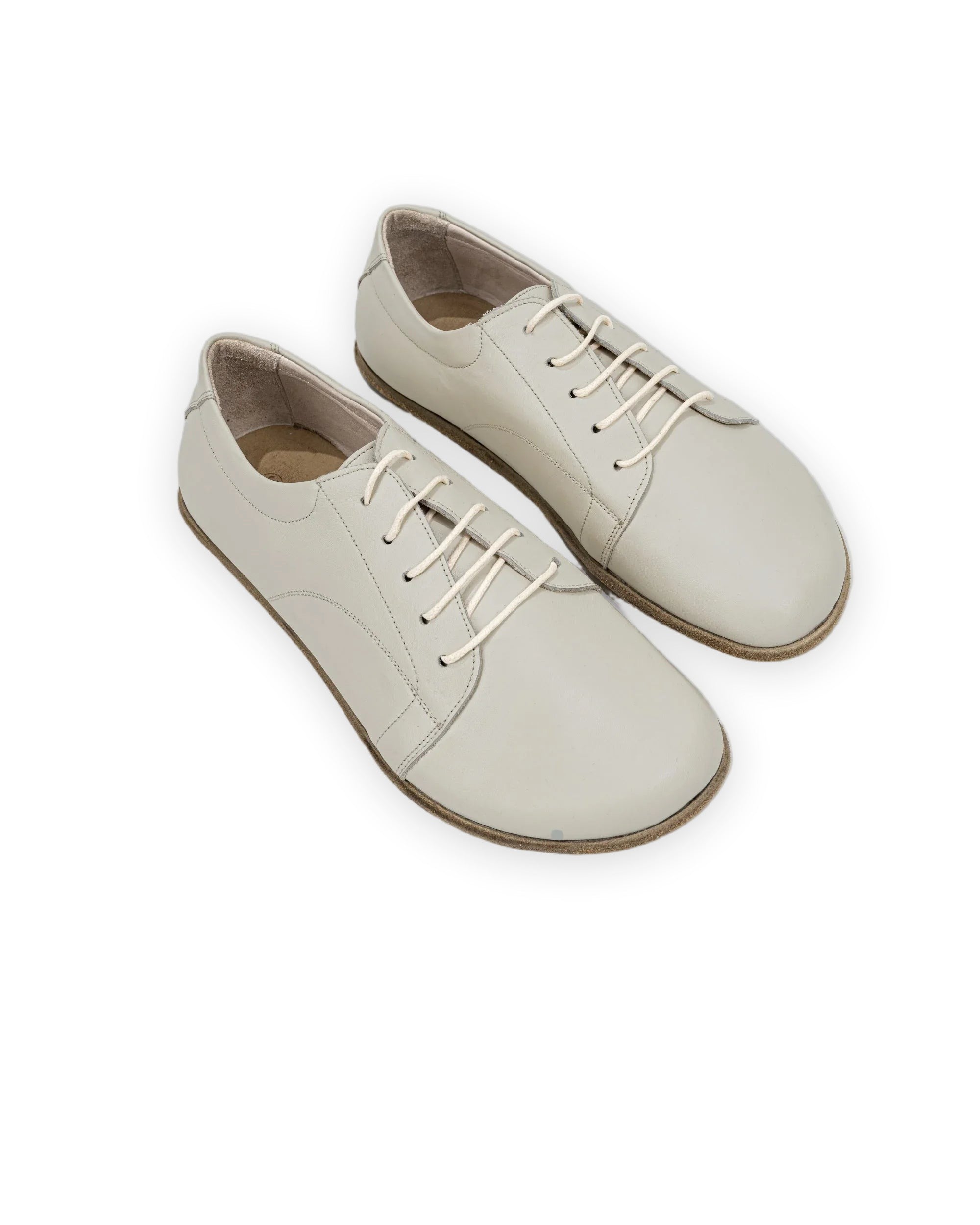
 Zero Drop Mens Sneaker | Black Full-Grain Leather, Wide Toe Box, Artisan Made
View product
Zero Drop Mens Sneaker | Black Full-Grain Leather, Wide Toe Box, Artisan Made
View product
Why zero drop shoes are debated for Achilles pain
You will find two opposing views online: that flat, flexible shoes let the Achilles work "more naturally", and that they overload an already sensitive tendon. The honest position is that how you switch, and whether your tendon is currently painful, matters more than the shoe itself. The key design difference is heel-to-toe drop: the height difference between the heel and the forefoot.
 Zero Drop Mens Sneaker | Black Full-Grain Leather, Wide Toe Box, Artisan Made
View product
Zero Drop Mens Sneaker | Black Full-Grain Leather, Wide Toe Box, Artisan Made
View product
What is Achilles tendinopathy?
The Achilles tendon connects the calf muscles to the heel bone and takes a lot of load when you walk, run or climb stairs. Achilles tendinopathy (often called tendinitis) usually develops when the tendon is asked to handle more load than it is used to, for example after a sudden increase in activity or a change of footwear. Typical symptoms are pain and stiffness at the back of the ankle, often worse in the morning or after rest, and tenderness when you press the tendon.
 Zero Drop Mens Sneaker | Black Full-Grain Leather, Wide Toe Box, Artisan Made
View product
Zero Drop Mens Sneaker | Black Full-Grain Leather, Wide Toe Box, Artisan Made
View product
How heel height changes the load
Most everyday and athletic shoes raise the heel above the forefoot. That puts the calf and Achilles in a slightly shortened position, which is why a heeled shoe can feel easier on a sore tendon. A zero drop shoe keeps heel and forefoot level, so the calf and Achilles work through a longer range with every step. A lower heel height asks more of the calf and Achilles, so build up slowly.
The risk of switching too fast
Going straight from a cushioned, heeled shoe to a flat shoe for a full day is a common reason people feel new Achilles or calf pain. This is mostly a matter of pacing. In a study of runners who moved to minimalist shoes over ten weeks, more showed signs of bone stress in the foot than those who stayed in their usual shoes (Ridge 2013), a reminder that the lower leg needs time to adapt. During an active flare-up of Achilles pain, it is not the time to change footwear.
A sensible transition plan
A switch to barefoot shoes takes weeks to months. Let your body set the pace:
- Start small: 30–60 minutes a day of easy walking on flat, even ground.
- Check the next morning: mild muscle tiredness in the calves is common; sharp pain or stiffness that lingers means cut back.
- Increase only when there is no next-day pain or stiffness.
- Keep your usual shoes in rotation for longer days and exercise.
If you are in physiotherapy for Achilles tendinopathy, talk to your physiotherapist before changing shoes. Rehab follows clinical practice guidelines (Martin 2018), and they can tell you if and when a flatter shoe fits your plan. Our transition guide has a week-by-week outline.
What to look for in a shoe
- A true zero drop sole with no hidden heel wedge, so you know what you are adapting to. See our zero drop shoes.
- A wide toe box so your toes are not squeezed.
- A flexible sole that bends with your foot.
- A secure fit around the midfoot and heel so your foot does not slide. Our fit guide shows how to check.
- Soft material around the heel so nothing rubs on a sensitive tendon.
Bespoky shoes are handmade to order in our own workshops in Gaziantep and Istanbul by a four-generation shoemaking family, in genuine, vegetable-tanned (chrome-free) calf leather, suede or nubuck.
When to see a professional
This article is general information, not medical advice. See a doctor or physiotherapist if your Achilles pain is sharp or getting worse, if swelling does not go down, if your ankle feels weak, or if you felt or heard a "pop" at the back of the ankle (seek care promptly in that case). They can tell you whether a change of footwear makes sense for you.
FAQ
Can barefoot shoes cause Achilles tendinitis?
Switching to them too quickly can overload the tendon and lead to pain. A slow build-up lowers that risk.
Are barefoot shoes good for an active Achilles injury?
It is generally better not to switch during a painful flare-up. Once things have settled, ask your physiotherapist whether and how to introduce flatter shoes.
What is the best way to transition with Achilles concerns?
Short periods of easy walking at first, increasing only when there is no next-day pain or stiffness, ideally with guidance from your physiotherapist.
Sources
- Martin RL et al. Midportion Achilles tendinopathy: clinical practice guideline, revision 2018. J Orthop Sports Phys Ther. 2018;48(5):A1-A38. PubMed 29712543
- Ridge ST et al. Foot bone marrow edema after a 10-wk transition to minimalist running shoes. Med Sci Sports Exerc. 2013. PubMed 23439417
Written by Mesut Bozkurt · Updated 2 October 2026