
Contents
If you've spent any time shopping for shoes that let your feet move the way they were built to move, you've probably run into two labels that get tossed around almost interchangeably: barefoot shoes and minimalist shoes. Some brands use them as synonyms. Others draw a hard line between them. And honestly, that inconsistency is part of why so many people end up confused -- and sometimes disappointed when a "minimalist" shoe turns out to have more structure than they expected.
There's no single governing body that certifies what counts as "barefoot" the way there's a standard for, say, shoe sizing. So the terms live on a spectrum. But once you know what to actually look at -- sole thickness, heel-to-toe drop, toe box shape, and flexibility -- the difference becomes easy to spot, and choosing the right pair gets a lot simpler.
The Short Version
Barefoot shoes are the strictest end of the spectrum: zero drop, ultra-thin flexible sole, wide toe box, no stability or motion-control features. The goal is to come as close as possible to the sensation of walking with nothing on your feet, just with a layer of protection against glass, gravel, and hot pavement.
Minimalist shoes sit somewhere in the middle. They borrow some barefoot principles -- often a lower drop, a roomier toe area -- but keep a bit more cushioning, a slightly stiffer sole, or mild arch support. Think of them as a bridge between a traditional running shoe and a true barefoot shoe, rather than the real thing.
Where They Actually Diverge
1. Sole Thickness and Ground Feel
This is the clearest giveaway. A genuine barefoot sole is thin enough that you can feel texture changes underfoot -- a pebble, a seam in the sidewalk, the edge of a rug. Minimalist soles are thicker and more cushioned; they reduce impact but also mute that sensory feedback. If you press your thumb into the sole and it barely gives, or you can't feel the ground through it when you walk, it's minimalist at best, not barefoot.
2. Heel-to-Toe Drop
Drop is the height difference between the heel and the forefoot. A true barefoot shoe has zero drop -- heel and toe sit at exactly the same level, just like your foot does naturally when you're not wearing anything. Minimalist shoes often advertise a "low drop," which can mean anywhere from 2mm to 8mm. That might sound small, but on a foot that's used to zero drop, even 4mm changes how your calf and Achilles tendon load with every step.
3. Toe Box Width
Barefoot shoes are built with a wide, foot-shaped toe box that lets your toes splay naturally -- which matters for balance and for spreading your weight across the whole foot instead of just the ball and heel. Minimalist shoes vary a lot here. Some brands keep a traditional tapered toe shape even while dropping the cushioning elsewhere, which defeats a good part of the purpose if foot health is why you're shopping in this category to begin with.
4. Flexibility
Try the twist test: hold a shoe at both ends and twist it like a towel. A barefoot shoe should fold and twist easily in every direction, because your bare foot does the same. A minimalist shoe will usually resist more, especially through the midsole, because some structure is still built in on purpose.
5. Support Features
Barefoot shoes deliberately leave out arch support, motion control, and stability posts -- the idea is that your foot's own muscles do that work once they're strong enough. Minimalist shoes often keep a light version of one or more of these, which can make them a gentler entry point if a fully unstructured shoe feels like too much, too soon.
Quick Comparison
| Feature | Barefoot Shoes | Minimalist Shoes |
|---|---|---|
| Heel-to-toe drop | 0mm (zero drop) | 2-8mm, often marketed as "low drop" |
| Sole thickness | Very thin, high ground feel | Thicker, more cushioned |
| Toe box | Wide, foot-shaped | Varies, sometimes still tapered |
| Flexibility | Twists and folds freely | Some built-in structure |
| Arch support | None by design | Often a light version present |
So Which One Is Right for You?
If you're brand new to this whole category and your feet have spent years in cushioned, structured shoes, a minimalist shoe can be a reasonable stepping stone -- it nudges your gait in the right direction without asking everything of your feet at once. We cover that transition window in detail in our guide to zero-drop shoes and how to transition safely.
If you already have decent foot strength, or you've been wearing minimalist shoes for a while and want the full sensory and strengthening benefit, a true barefoot shoe is the better fit. Just ease into daily wear rather than switching overnight -- our guide to breaking in new barefoot shoes walks through exactly how to pace that first month.
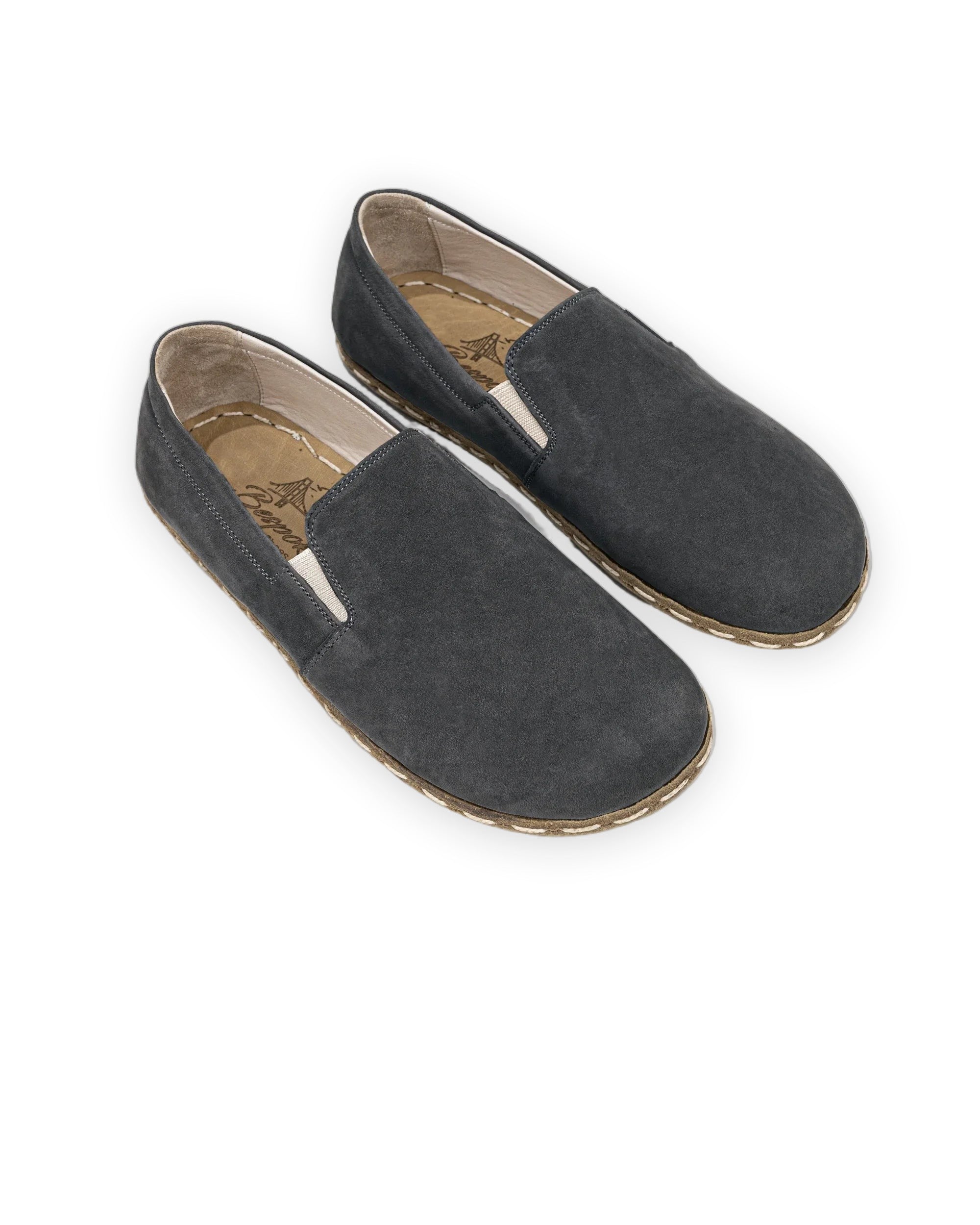
At Bespoky, we build on the stricter end of the spectrum on purpose: zero drop, true-to-foot toe boxes, and soles thin enough to actually feel the ground, across our women's barefoot shoes and men's barefoot shoes. If you want that barefoot feel in something dressier, our barefoot Oxfords hold the same zero-drop, wide-toe-box construction under a polished silhouette, and our barefoot boots carry it through colder months.
Frequently Asked Questions
Is a "zero drop" shoe automatically a barefoot shoe?
Not necessarily. Zero drop is one requirement of a true barefoot shoe, but a shoe can be zero drop and still have a narrow toe box or a stiff, cushioned sole -- which puts it closer to minimalist territory. Barefoot status really depends on all four factors together: drop, sole thickness, toe box, and flexibility.
Can I use minimalist shoes as a stepping stone to barefoot shoes?
Yes, and for a lot of people that's exactly the right order. Minimalist shoes let your feet adjust to less heel lift and a bit more ground feel before you take on a fully flexible, zero-cushion sole. There's no fixed timeline -- some people transition in a few weeks, others take a few months, and that's completely normal.
Do minimalist shoes still help with foot strength?
To a degree, yes -- any reduction in drop and structure asks a little more of your foot and ankle muscles than a traditional cushioned shoe does. But the strengthening effect is noticeably stronger in a true barefoot shoe, since there's no support system doing the work for you.
Why do some brands call the same shoe both "minimalist" and "barefoot"?
Because there's no universal certification standard, brands define these terms themselves, and marketing sometimes blurs the line further. That's exactly why it's worth checking the actual specs -- drop, sole thickness, toe box width -- rather than trusting the label alone.