
Содержание
Short answer: flat, thin-soled barefoot shoes suit many lifters for deadlifts and general strength work, and many people simply prefer the ground feel. The research does not show a clear advantage: in one study lifters preferred squatting barefoot, but no biomechanical advantage was found and running shoes allowed a deeper squat (Sinclair 2015). For Olympic lifts, a heeled weightlifting shoe is usually the better tool.
Why footwear matters for lifting
Many people start lifting in cushioned running shoes. Those are built to soften repeated footstrikes with thick, soft foam. Under a heavy barbell, some lifters feel that soft foam shifts or squashes, and prefer something flatter and firmer underfoot.
A flat, thin sole puts less material between your foot and the floor, so you feel the ground more directly. Lifters often describe this as feeling more "rooted". That is a matter of preference rather than proven performance.
What the research says
In a study of 14 male lifters, participants preferred to squat barefoot, but the researchers found no biomechanical advantage for barefoot squatting; in running shoes the lifters squatted deeper with more knee bend (Sinclair 2015). So for squats, footwear is largely about preference and goals.
Away from the bar, there is some evidence that minimalist shoes affect the feet themselves: in one trial, walking in minimalist shoes increased foot muscle size and strength about as much as a foot exercise programme (Ridge 2019). Whether that changes lifting performance has not been tested.
Where a flat sole makes sense
Deadlifts
This is the clearest case. A thinner sole means the bar travels slightly less distance, and many lifters like being as close to the floor as possible when they pull.
Squats and general strength work
For back squats, presses, rows and accessory work, many people find a flat sole gives a consistent platform and makes it easy to spread their weight from heel to toe. The wide toe box and zero drop of our barefoot shoes also work for warm-ups and moving around the gym.
When barefoot shoes are not the best choice
Olympic weightlifting
The snatch and the clean and jerk need you to drop into a deep squat quickly with the bar overhead or on your shoulders, which takes a lot of ankle mobility. Weightlifting shoes have a hard, raised heel that reduces how far your ankle needs to bend, which helps many lifters stay upright. A flat, zero drop shoe can make those positions harder to reach.
What to look for in a flat lifting shoe
- A thin, firm sole that does not squash under load.
- A wide toe box so your toes can spread. See our wide toe box shoes.
- A secure fit: laces usually hold the foot more firmly than a slip-on. Our fit guide shows how to check.
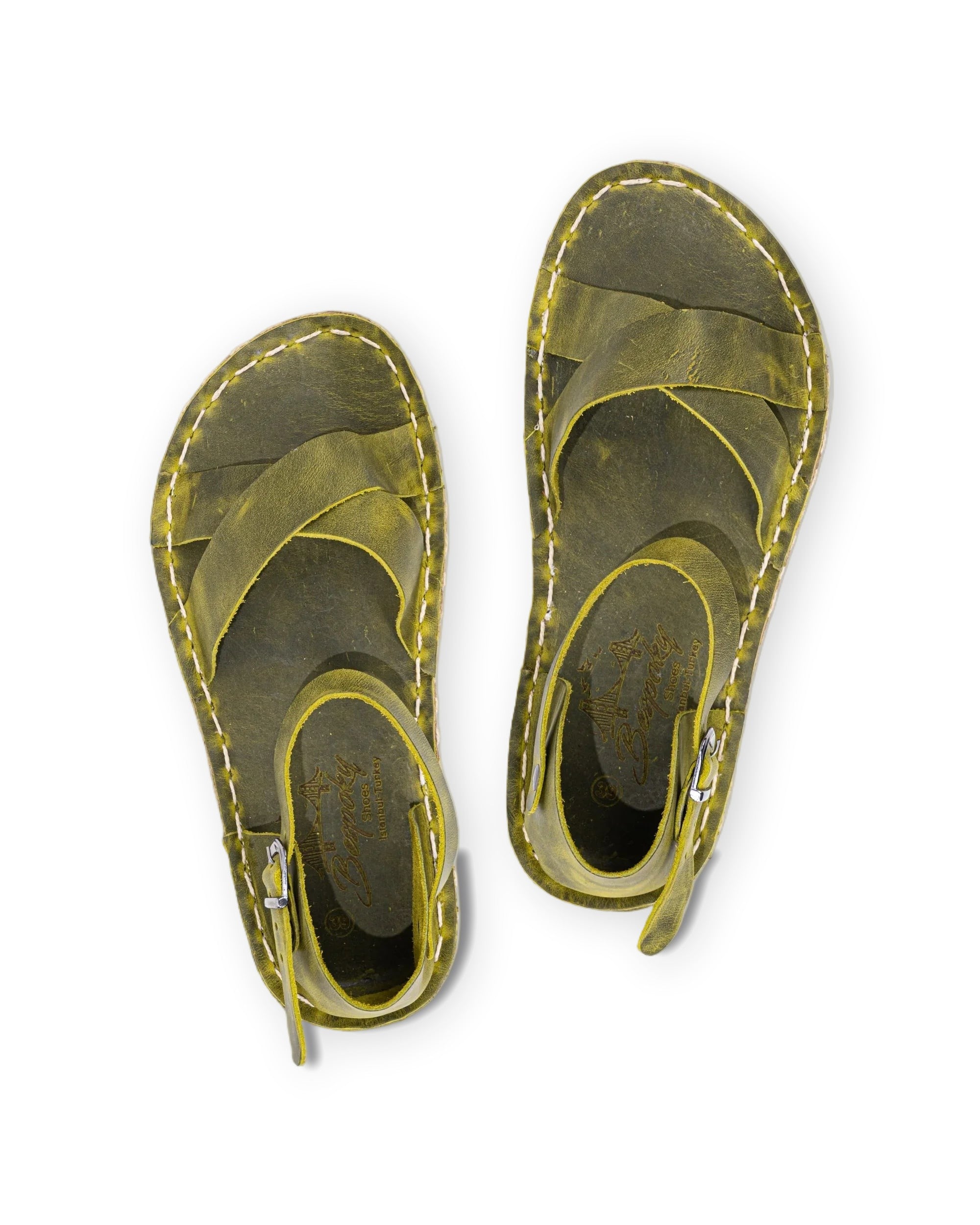
Bespoky shoes are handmade to order in genuine leather in our own workshops in Gaziantep and Istanbul, drawing on a four-generation shoemaking family.
How to switch for training
If you have trained in cushioned or heeled shoes for years, give your feet and ankles time. Start with warm-ups and lighter accessory work, keep your main lifts lighter than usual while you get used to the feel, and build up over several weeks. Our transition guide covers everyday wear.
When to see a professional
This article is general information, not medical advice. See a physiotherapist or sports medicine doctor if you have sharp, persistent or worsening pain in your feet, ankles, knees or back during or after lifting, or pain that changes how you move. They can tell you whether a change of footwear makes sense for you.
FAQ
Can I lift heavy right away in barefoot shoes?
Ease in. Use them for warm-ups and lighter sets first so your feet and ankles get used to the feel before a maximal attempt.
Are Converse or Vans the same as barefoot shoes for lifting?
They share a flat, fairly firm sole, but barefoot shoes also have a foot-shaped toe box and true zero drop. Our complete guide to barefoot leather shoes explains the differences.
Do flat shoes work for CrossFit or functional fitness?
For the lifting parts, many people like them. For jumps and sprints, some prefer more cushioning. It comes down to preference.
What is the difference between barefoot shoes and weightlifting shoes?
The heel. Weightlifting shoes have a hard, raised heel for Olympic lifts; barefoot shoes are completely flat.
Sources
- Sinclair J et al. Footwear and 3-D kinematics/muscle activation during the barbell back squat in males. Eur J Sport Sci. 2015;15(7):583-90. PubMed 25331484
- Ridge ST et al. Walking in minimalist shoes is effective for strengthening foot muscles. Med Sci Sports Exerc. 2019. PubMed 30113521
Written by Mesut Bozkurt · Updated 2 October 2026