
Contents
Short answer: many people find flat, roomy shoes comfortable in pregnancy, and barefoot shoes are flat and roomy: a wide toe box leaves space if your feet swell, and there is no raised heel. They are not a treatment for any pregnancy condition. Feet can get longer and arches lower during pregnancy, sometimes for good (Segal 2013), so re-measure before you buy, and check with your midwife or doctor if you have any foot concerns.
 Sandals for Women - Beige, Wide Toe Box, Toe Splay, Full-Grain Leather
View product
Sandals for Women - Beige, Wide Toe Box, Toe Splay, Full-Grain Leather
View product
Why do feet change during pregnancy?
Pregnancy brings extra weight, more fluid and hormonal changes that are thought to loosen ligaments, including in the feet. Many people notice swelling in the feet and ankles, especially later in the day and in the third trimester.
Foot shape can change too. A study that followed 49 women from the first trimester to about four months after birth found that arch height fell and foot length increased, and the changes appeared to be lasting, mostly with a first pregnancy (Segal 2013). That is a good reason to measure your feet again before buying shoes during or after pregnancy.
 Sandals for Women - Beige, Wide Toe Box, Toe Splay, Full-Grain Leather
View product
Sandals for Women - Beige, Wide Toe Box, Toe Splay, Full-Grain Leather
View product
What barefoot shoes offer in pregnancy
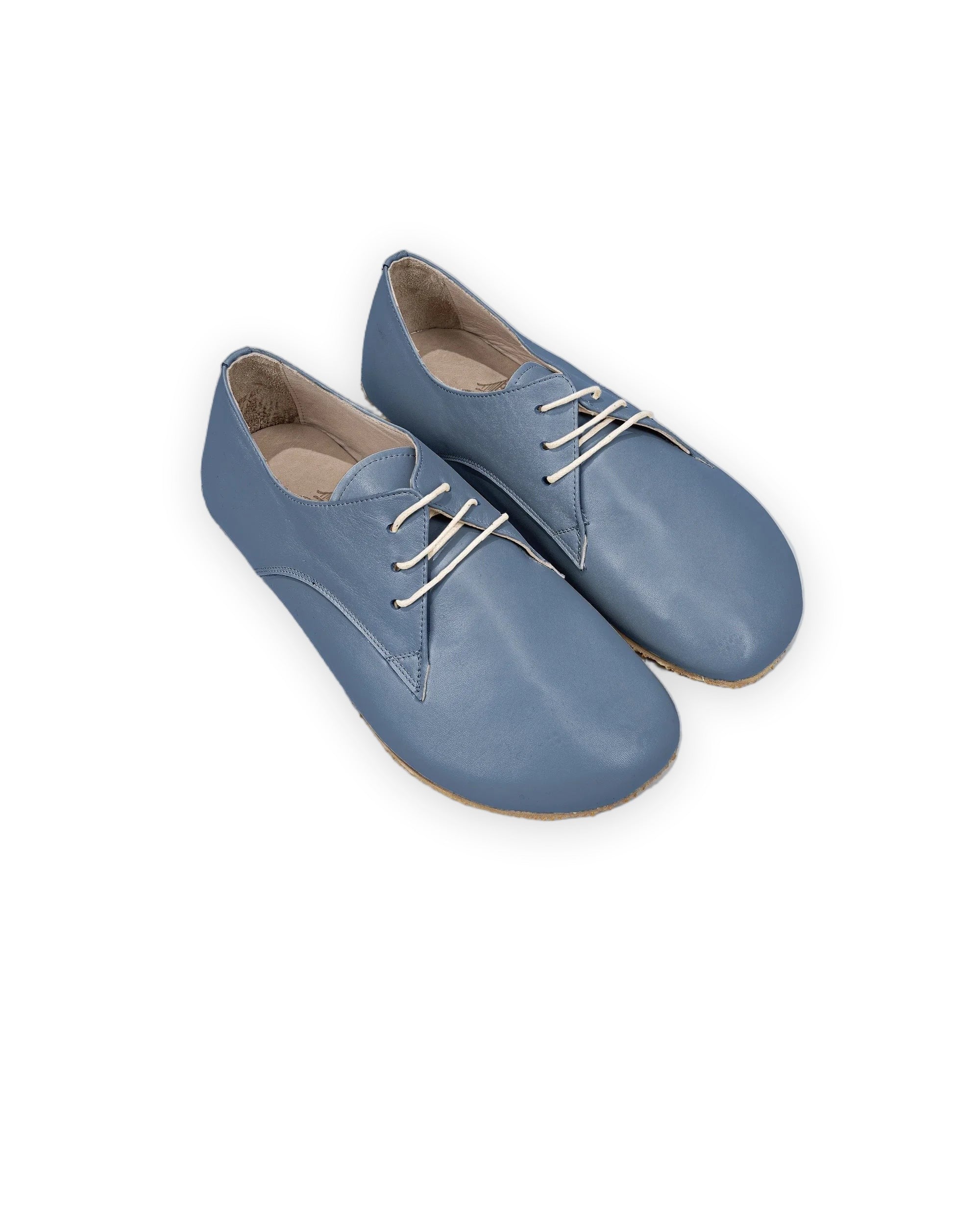
A wide, foot-shaped toe box
The toe box follows the shape of your foot instead of tapering, so there is room if your feet swell or widen. See our wide toe box shoes.
A flat, zero drop sole
With no raised heel, your weight is not tipped toward the ball of the foot as it is in heeled shoes. Many people find flat shoes easier to walk in as their bump grows. See our zero drop shoes.
A flexible sole
A thin sole bends with your foot and lets you feel the ground. Some people like that extra ground feel; others prefer more cushioning, especially on hard floors.
Breathable leather
Feet can feel warm in pregnancy. Our shoes are handmade to order in genuine, vegetable-tanned (chrome-free) leather, which breathes better than many synthetic materials.
 Sandals for Women - Beige, Wide Toe Box, Toe Splay, Full-Grain Leather
View product
Sandals for Women - Beige, Wide Toe Box, Toe Splay, Full-Grain Leather
View product
Choosing shoes as your pregnancy progresses
If you are new to barefoot shoes, check with your midwife or doctor first, and switch gradually rather than all at once: a flat, thin shoe asks more of your feet and calves. Runners who switched to minimalist shoes over ten weeks showed more signs of bone stress in the foot than those who did not (Ridge 2013). Our transition guide explains a gradual approach.
Later in pregnancy, bending to tie laces gets harder and swelling is often more noticeable. Easy styles such as ballet flats or adjustable sandals can be practical. Leave a little extra room and re-check your size; our fit guide shows how to measure. You can browse all our barefoot shoes too.
Every Bespoky pair is handmade to order in our own workshops in Gaziantep and Istanbul, drawing on a four-generation shoemaking family.
When to see a professional
This article is general information, not medical advice. Contact your midwife or doctor promptly if you have sudden or severe swelling of the feet, hands or face, especially with headache or changes in your vision. Also speak to them, or to a podiatrist, about foot or heel pain that makes walking difficult, numbness, one swollen, painful calf, or a diagnosed foot condition; they may recommend added arch support. They can tell you whether a change of footwear makes sense for you.
FAQ
Are flat shoes a good choice during pregnancy?
Many people find flat shoes with room for the toes more comfortable than heels or narrow shoes. If you have a foot condition, ask your midwife, doctor or podiatrist what suits you.
Should I buy a bigger size during pregnancy?
Measure first. Feet can get longer and arches lower during pregnancy, and the change may last (Segal 2013), so you may need a different size than before.
Can I walk for exercise in barefoot shoes while pregnant?
Walking is a common low-impact activity; check with your midwife or doctor what suits you. If you already wear barefoot shoes, you may be comfortable walking in them. If you are new to them, build up slowly.
Sources
- Segal NA et al. Pregnancy leads to lasting changes in foot structure. Am J Phys Med Rehabil. 2013;92(3):232-40. PubMed 23117270
- Ridge ST et al. Foot bone marrow edema after a 10-wk transition to minimalist running shoes. Med Sci Sports Exerc. 2013. PubMed 23439417
Written by Mesut Bozkurt · Updated 2 October 2026