
Icindekiler
Why Balance Gets Harder to Trust as You Age — And Why Footwear Is Part of the Story
Somewhere around your mid-sixties, a lot of people notice the same quiet shift: stepping off a curb feels a little less automatic, standing on one leg to put on a sock takes real concentration, and a stumble that used to end in a laugh now ends in a grabbed railing. That's not clumsiness. It's your feet losing some of the sensory feedback — the nerve signals that tell your brain exactly where the ground is and how your weight is shifting — that they relied on your whole life.
Here's the part that surprises most people: a lot of that feedback loss isn't really about aging feet. It's about decades of thick, stiff-soled shoes that quietly "muted" the ground under you. That's the question researchers have started asking directly — can switching to a thinner-soled, wider, more barefoot-style shoe give some of that feedback back, and does it actually translate into steadier balance and fewer falls?
What the Research Actually Says
This isn't a wellness-blog guess — it's an active area of clinical research. The University of East Anglia has run a specific study, "Do minimalist shoes improve balance and foot strength in older adults?", looking at whether thinner, more flexible footwear changes balance outcomes in people at risk of falls. A related trial, the Feetback Shoe Study, registered with clinicaltrials.gov, is testing minimal shoes specifically in older adults who've already had a fall. Separately, the journal Gerontology has published research on the long-term effects of minimal footwear use on fall-related outcomes, and a 2025 methods paper in Frontiers in Aging outlines ongoing trials into intrinsic foot muscle strengthening for older adults.
The honest summary of where the science stands: researchers are taking the idea seriously enough to run controlled trials, and the working theory — that a wider toe box and a thinner, more flexible sole let your foot muscles and nerve endings do more of the balancing work instead of a rigid shoe doing it for you — lines up with basic foot biomechanics. But this is still an evolving field. Nobody honest tells you a pair of shoes replaces a fall-prevention program, physical therapy, or a conversation with your doctor if you have a real fall-risk history. What the research supports is more modest and still genuinely useful: that your footwear is one of the levers you can pull, and that it's worth pulling thoughtfully rather than ignoring.
What Actually Changes When You Switch
Three mechanical things shift when you move from a conventional cushioned, narrow, stiff-soled shoe to a barefoot-style one, and each one plays into balance differently:
- Ground feedback returns. A thin, flexible sole lets you feel subtle changes in the surface — a slight slope, a bit of gravel, an uneven tile — the moment your foot touches down, instead of after you've already shifted your weight onto it.
- Your toes get room to splay. A wide toe box lets your toes spread naturally on push-off and when you catch your balance, which widens your actual base of support in a way a tapered toe box physically prevents.
- Small stabilizing muscles wake back up. Years in a rigid shoe let the intrinsic muscles of the foot — the ones that make tiny second-to-second corrections — go underused. A barefoot-style shoe gives them a reason to work again, gradually.
None of this is instant. Feedback and toe splay happen the moment you put the shoes on; rebuilding the small muscles that actually stabilize you happens over weeks, which is exactly why the transition pace below matters more than the shoes themselves.
A Transition Plan Built for Confidence, Not Speed
If you've read any barefoot-shoe transition advice aimed at runners or gym-goers, ignore the pacing — it's too aggressive for this use case. The goal here isn't athletic performance, it's steady, reliable footing, so the plan is slower and leans on terrain you already trust.
| Phase | Typical length | What to do |
|---|---|---|
| 1. Indoors, seated-to-standing | 1-2 weeks | Wear the shoes around the house for short stretches while doing normal tasks — standing at the counter, walking between rooms. No new terrain yet. |
| 2. Familiar outdoor ground | Weeks 2-4 | Add short walks on sidewalks or paths you already know well, ideally with someone else nearby the first few times. |
| 3. Longer, varied walks | Weeks 4-8 | Extend distance gradually and introduce mildly uneven ground (grass, gentle slopes) only once flat-ground walks feel completely unremarkable. |
| 4. Everyday default | Ongoing | Once confidence is solid, the barefoot-style shoe can become your regular daily shoe, with a traditional supportive shoe kept for unfamiliar terrain, bad weather, or long days on your feet. |
A cane, trekking pole, or handrail isn't a sign you're "not ready" for this — if you already use one, keep using it through the entire transition. The shoes are meant to work alongside the support you already rely on, not replace it.
Who Should Talk to a Doctor First
This article is general education, not a substitute for medical advice, and a footwear change is exactly the kind of thing worth a quick conversation with your doctor or a physical therapist first if any of the following apply to you: you've had a fall in the past year, you have significant numbness or reduced sensation in your feet, you use a cane or walker for stability, or you have a diagnosed balance or inner-ear condition. None of these rule out barefoot-style shoes — but they're exactly the situations where a professional should help you pace the transition, or confirm it's the right call at all.
What to Look for in a Shoe Built for This
- A genuinely wide toe box — your toes should be able to spread flat, not just "fit."
- A flexible, grippy sole with enough texture to feel secure on smooth flooring, not just thin for the sake of being thin.
- A secure, adjustable closure (laces or straps you can snug properly) rather than a loose slip-on, since a shoe that shifts on your foot works against the whole point.
- Zero drop, introduced gradually — a flat heel-to-toe platform is the long-term goal, but if you're coming from decades of heeled shoes, give your calves and Achilles tendon the same gradual runway your balance needs.
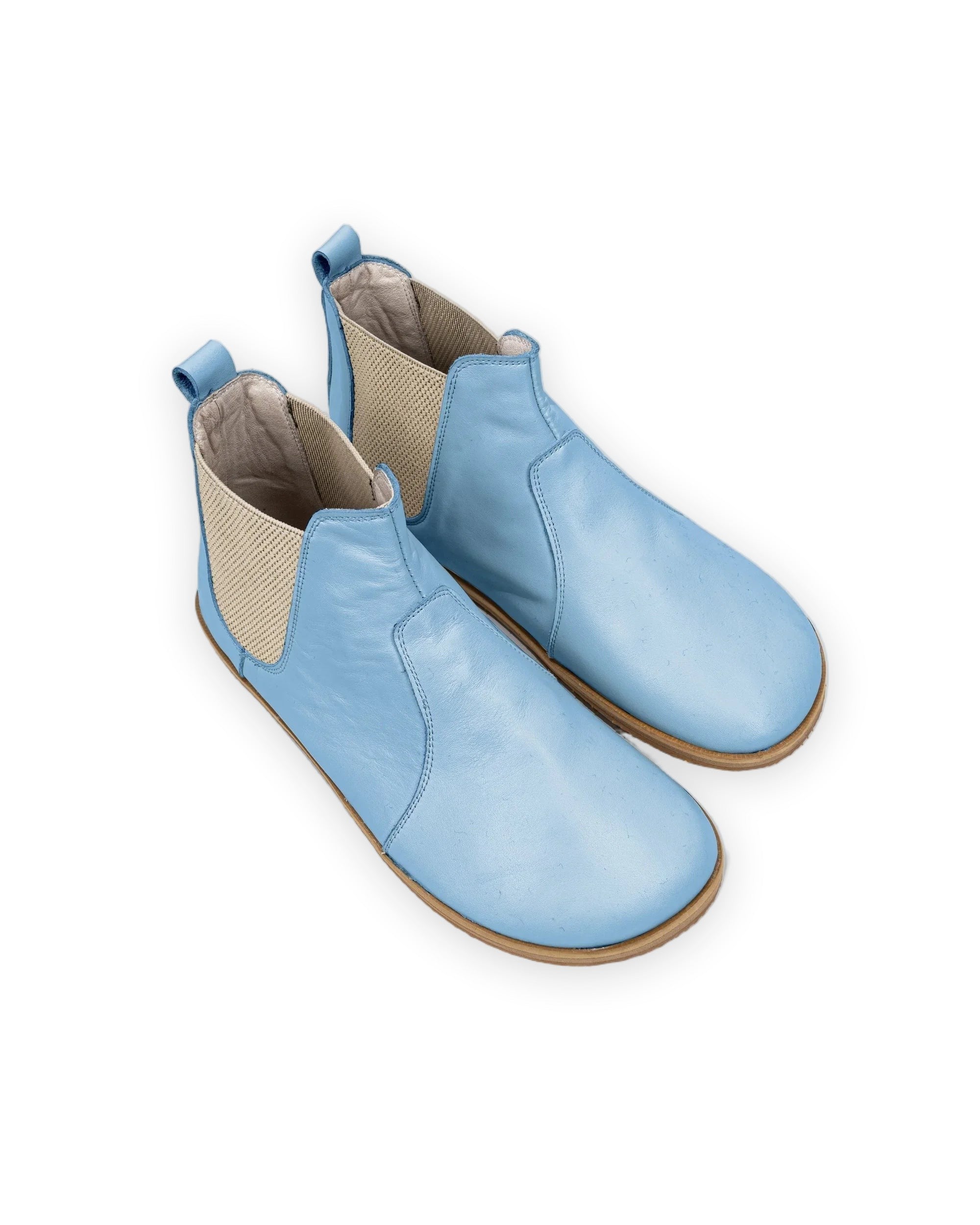
Our women's and men's barefoot collections are built around exactly this combination — real leather, a true wide toe box, and a flexible sole with enough grip to feel trustworthy underfoot. If you want extra ankle support while you build confidence, our barefoot boots give you the same wide-toe, zero-drop foundation with more structure around the ankle.
If you're brand new to this kind of shoe entirely, start with our general beginner's transition guide before layering the balance-specific pacing above on top of it, and if you're curious about the muscle-strengthening side of this, here's what barefoot shoes actually do for foot strength over time.
Frequently Asked Questions
Are barefoot shoes safe for seniors with a history of falls?
They can be part of a safe plan, but "history of falls" is specifically the situation where you should loop in your doctor or a physical therapist before changing footwear on your own. They can tell you whether a slower transition fits your situation, or whether another approach should come first.
Do I need to give up my supportive shoes completely?
No — most people who do this well keep a traditional supportive shoe for unfamiliar terrain, bad weather, or very long days, and use the barefoot-style shoe for familiar, everyday ground once they're confident in it. It doesn't have to be all-or-nothing.
How long before I'd actually notice a difference in my balance?
Ground feedback and toe splay are noticeable from day one. The deeper changes — the small foot muscles actually getting stronger — tend to build gradually over several weeks of consistent, gentle use, which is why the slow transition plan matters more than any single pair of shoes.
What if I have numbness or reduced feeling in my feet?
That's a specific reason to talk to your doctor before trying barefoot-style shoes, not a reason to assume they're off the table. Reduced sensation changes how reliably you can trust ground feedback, and a professional needs to weigh in on that before you do.
If you're ready to take the first step, browse the women's or men's collection for a pair with real room for your toes, start with short indoor wear, and let your own steadiness — not a calendar — set the pace from there.