
Spis tresci
Stand two boots side by side and, from across the room, they might look nearly identical: same leather, same laces, same general silhouette. Put your foot inside each one, though, and the story changes completely. One holds your toes together, lifts your heel slightly, and does a fair amount of the work for you. The other lets your foot spread out, sits flat from heel to toe, and asks your foot to do what it was built to do. That's the real gap between barefoot boots and traditional boots — and it has almost nothing to do with looks.
If you've been reading about "zero drop" or "wide toe box" boots and wondering whether the difference is marketing language or something you'd actually feel on day one, here's what changes, what doesn't, and how to decide which one belongs on your feet.
 Men Zero Drop Chelsea Boots Black | Full-Grain Leather, Hand-Stitched
View product
Men Zero Drop Chelsea Boots Black | Full-Grain Leather, Hand-Stitched
View product
The Three Places Where They Actually Diverge
Toe Box: Room to Splay vs. Room to Taper
Most traditional boots are built on a last that narrows toward the front, often mimicking the pointed or rounded shape people expect a "dress" boot to have. That taper pushes the smaller toes inward and stacks them against the big toe, especially by the end of a long day.
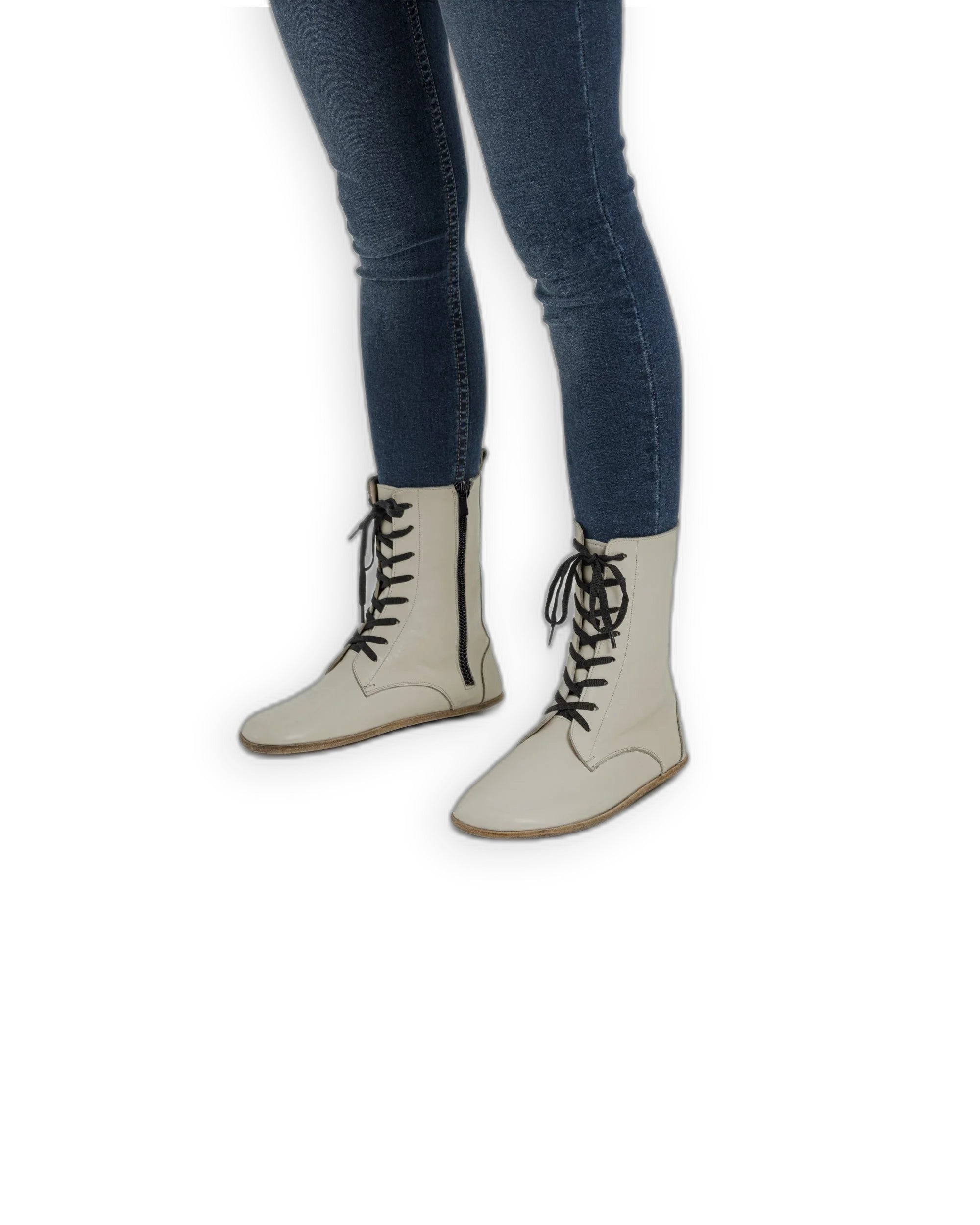
Barefoot boots are built the other way around: foot-shaped, wide through the front, so the toes can sit next to each other the way they would if you were standing barefoot on the floor. This isn't just a comfort detail — a foot that can spread naturally on contact has a wider, more stable base to balance on.
Sole and Drop: Ground Feel vs. Cushioned Lift
"Heel-to-toe drop" is the difference in height between the heel and the forefoot inside the sole. Traditional boots typically carry a noticeable drop, sometimes considerable heel-to-forefoot elevation, plus a thicker midsole between your foot and the ground. Barefoot boots use a flat, zero-drop sole with a thin stack height, so your heel and forefoot sit at the same level and you keep a genuine sense of the ground underneath you.
Neither is "wrong." A thicker, elevated sole cushions and absorbs impact for you. A thin, flat sole gives that job back to your foot and lower leg, which is exactly the appeal for people trying to rebuild natural foot strength and proprioception.
Structure: Flexible Frame vs. Built-In Support
Traditional boots often rely on stiffer shanks, structured heel counters, and rigid support built into the boot itself. Barefoot boots are deliberately more flexible — the leather and sole are meant to bend with the foot rather than hold it in one position. The support argument here is philosophical as much as structural: traditional design assumes the boot should support the foot; barefoot design assumes the foot, given the chance, can support itself.
 Men Zero Drop Chelsea Boots Black | Full-Grain Leather, Hand-Stitched
View product
Men Zero Drop Chelsea Boots Black | Full-Grain Leather, Hand-Stitched
View product
Side-by-Side: The Quick Comparison
| Feature | Traditional Boots | Barefoot Boots |
|---|---|---|
| Toe box shape | Tapered, often pointed | Wide, foot-shaped, room to splay |
| Heel-to-toe drop | Noticeable elevation | Zero drop, flat from heel to toe |
| Sole thickness | Thicker, more cushioned | Thin, closer ground feel |
| Flexibility | Stiffer shank and structure | Flexible, bends with the foot |
| Main goal | Cushion and support the foot | Let the foot move and work naturally |
 Men Zero Drop Chelsea Boots Black | Full-Grain Leather, Hand-Stitched
View product
Men Zero Drop Chelsea Boots Black | Full-Grain Leather, Hand-Stitched
View product
What About Ankle Support?
This is the objection that comes up first, and it's worth addressing directly: does a thinner, more flexible boot leave your ankle unprotected? Not in the way most people assume. Ankle stability comes primarily from the strength and coordination of the muscles around the joint, not from a rigid shaft locking it in place. A wide, stable base under a naturally splayed foot actually gives you more reliable footing on uneven ground than a narrow, elevated heel does. That said, ankle support built up over years of stiffer footwear doesn't disappear overnight — which is exactly why the transition matters.

Do Barefoot Boots Need a Break-In Period?
Less than people expect, but not zero. A well-fitted barefoot boot in quality leather should feel reasonably comfortable from the first walk — there's no rigid structure to "wear down" the way there is with a stiff traditional boot. What does take time is your feet and calves adjusting to a flatter sole and a wider range of motion, especially if you're coming from years of elevated heels or narrow toe boxes. A gradual introduction — a few hours at a time in the first week or two — lets your feet catch up to the boots rather than the other way around.
Durability: Does Thin Mean Fragile?
Sole thickness and durability aren't the same thing. A thin, flexible sole made from a quality material and a well-constructed upper in full-grain leather can hold up just as long as a bulkier traditional boot — what determines lifespan is the craftsmanship and materials, not how much rubber sits underfoot. Full-grain leather in particular tends to soften and mold to your foot over time rather than breaking down, which is part of why it's the standard choice for barefoot boot uppers.
So Which One Actually Fits Your Day?
The honest answer depends on what you're asking your feet to do.
- If you spend most of the day on your feet and want your foot muscles doing real work — walking, standing, uneven terrain — a barefoot boot lets that happen naturally.
- If you're newly transitioning from years of structured, elevated footwear, ease into barefoot boots gradually rather than switching every pair overnight.
- If you want the natural-foot benefits but in a dressier silhouette, a barefoot design doesn't have to mean casual — look for styles built on the same wide, flat last in cleaner leather finishes.
- If mobility or comfort concerns make a big footwear change feel risky, talk to a podiatrist before switching, especially if you have an existing foot condition.
Frequently Asked Questions
Are barefoot boots actually good for walking long distances?
Yes, for most people — the wide toe box and flat sole support a natural gait over distance. If you're new to zero-drop footwear, build up your mileage gradually rather than starting with an all-day hike.
Do barefoot boots work in cold or wet weather?
Many barefoot boots are made with full-grain leather and a proper sole tread, which handles cold and damp conditions reasonably well. The thinner sole does mean less built-in insulation than a bulky winter boot, so pairing them with a good wool sock matters more than it would with a heavily cushioned traditional boot.
Can I wear barefoot boots if I've always worn traditional boots with arch support?
You can, but ease into it. Years of elevated heels and structured arch support change how your calves and foot muscles are used to working. A gradual transition — a few hours a day at first — gives those muscles time to adjust instead of overworking them all at once.
Do barefoot boots look different from regular boots?
Less than you'd think from the outside. The biggest visual tell is usually the toe — rounder and roomier rather than tapered — but a well-made barefoot boot in classic leather sits comfortably next to any traditional pair in terms of style.
Whichever direction you're leaning, the shape of the last matters more than the label. If you want to see what a genuinely wide, zero-drop boot looks and feels like, browse our barefoot boots collection, or explore the full range for women's barefoot shoes and men's barefoot shoes. Curious how barefoot compares to minimalist footwear specifically? We covered that in Barefoot Shoes vs. Minimalist Shoes: What's the Real Difference?