
Contents
Short answer: shoes do change how children walk compared with going barefoot (Wegener 2011), but whether that matters in the long term is not settled. If you choose barefoot-style shoes for your child, look for a wide toe box and a flat, flexible sole, introduce them gradually, and check with a professional if your child has a foot condition or pain.

How do shoes affect the way children walk?
Many children prefer to be barefoot, and their feet are still developing. A systematic review of 11 studies found that shoes change children's gait compared with walking barefoot: children in shoes took longer steps and showed less motion in the foot, including at the big toe and midfoot (Wegener 2011). Whether these differences matter as children grow is not yet known.
Barefoot-style shoes aim to interfere as little as possible with how the foot moves. That is a design choice, not a proven health benefit, so it is worth keeping expectations realistic.

Key features of barefoot-style shoes
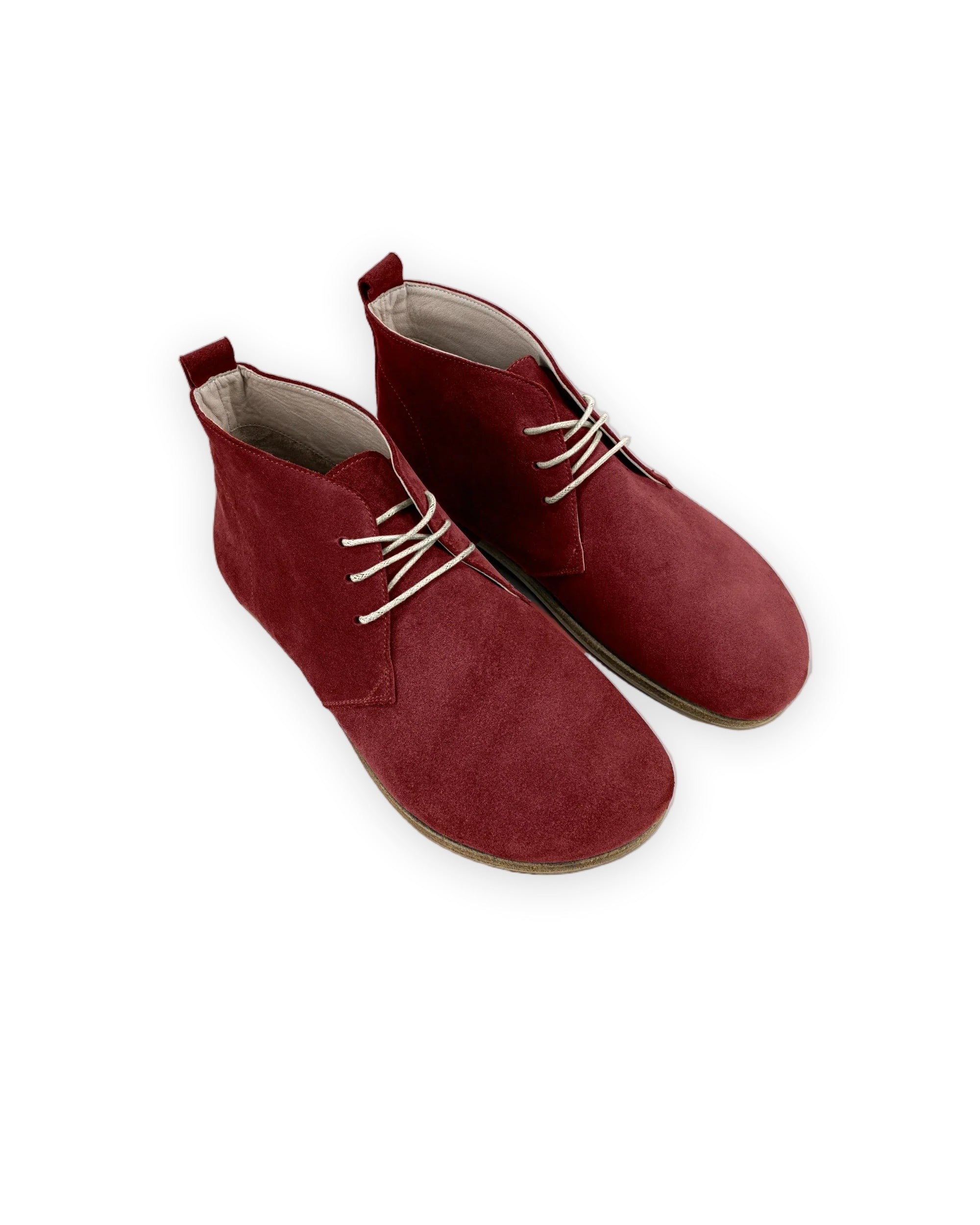
- A wide, foot-shaped toe box so the toes can spread instead of being squeezed into a point. See what this looks like in our wide toe box shoes.
- A zero drop sole: flat from heel to toe, with no raised heel. See our zero drop shoes.
- A thin, flexible sole that bends and twists with the foot and lets your child feel the ground.

How to introduce barefoot shoes gradually
1. Make time for bare feet
The simplest step needs no shoes at all: barefoot time at home or somewhere safe outdoors, such as grass or sand.
2. Build up wear time
Don't make the new shoes an all-day affair straight away. A gradual build-up, for example an hour a day at first, increasing over several weeks, is a sensible approach. If your child mentions soreness, keep to shorter periods for a few more days.
3. Consider an in-between shoe
Older children who have worn heavily cushioned trainers for years may find a fully minimal shoe a big change. A shoe with moderate cushioning and flexibility can be a useful step in between.
4. Switch together
If you are making the change yourself, doing it alongside your child can make it feel normal. Our transition guide describes a gradual approach for adults.
Sizing and fit
Measure your child's foot length rather than relying on age-based sizes, and leave room for growth and for the toes to spread. Our kids' sizing guide explains how to measure, and our fit guide describes how a barefoot shoe should feel.
Bespoky makes shoes for adults, handmade to order in our own workshops in Gaziantep and Istanbul by a four-generation shoemaking family. If you are switching too, see our barefoot shoes for parents: women's barefoot shoes and men's barefoot shoes.
When to see a professional
This article is general information, not medical advice. Ask a GP, paediatrician, paediatric podiatrist or physiotherapist before changing your child's shoes if they have a diagnosed foot condition being managed with specific footwear or orthotics, flat feet or high arches that cause pain or affect how they walk, or ongoing pain, limping or an unusual walking pattern. They can tell you whether a change of footwear makes sense for your child.
FAQ
At what age can a child start wearing barefoot shoes?
There is no official minimum age. Many parents introduce them once their child is walking confidently, with a gradual build-up and plenty of barefoot time.
Will barefoot shoes help my child's flat feet?
In young children, flexible flat feet are common and the arch often develops with age. Barefoot shoes are not a treatment for a foot condition; if you are concerned, ask a healthcare professional.
Is it normal for my child to feel some soreness?
Mild tiredness in the feet or calves can happen while they adjust. Sharp or lasting pain is not normal: slow down and get advice.
Can my child wear barefoot shoes for sports?
Once used to them, many children are comfortable in them for everyday play. For running-heavy sports, build up distance and intensity gradually.
Sources
- Wegener C et al. Effect of children's shoes on gait: systematic review and meta-analysis. J Foot Ankle Res. 2011;4:3. PubMed 21244647
Written by Mesut Bozkurt · Updated 2 October 2026