
Contents
Short answer: it depends on how flexible your arches are. People with flexible high arches, which flatten a little when they stand, may adapt to barefoot shoes with a slow transition. If your arches are rigid, painful or you often roll your ankle, be cautious: a thin, uncushioned shoe puts more load on the foot, so talk to a podiatrist or physiotherapist first.
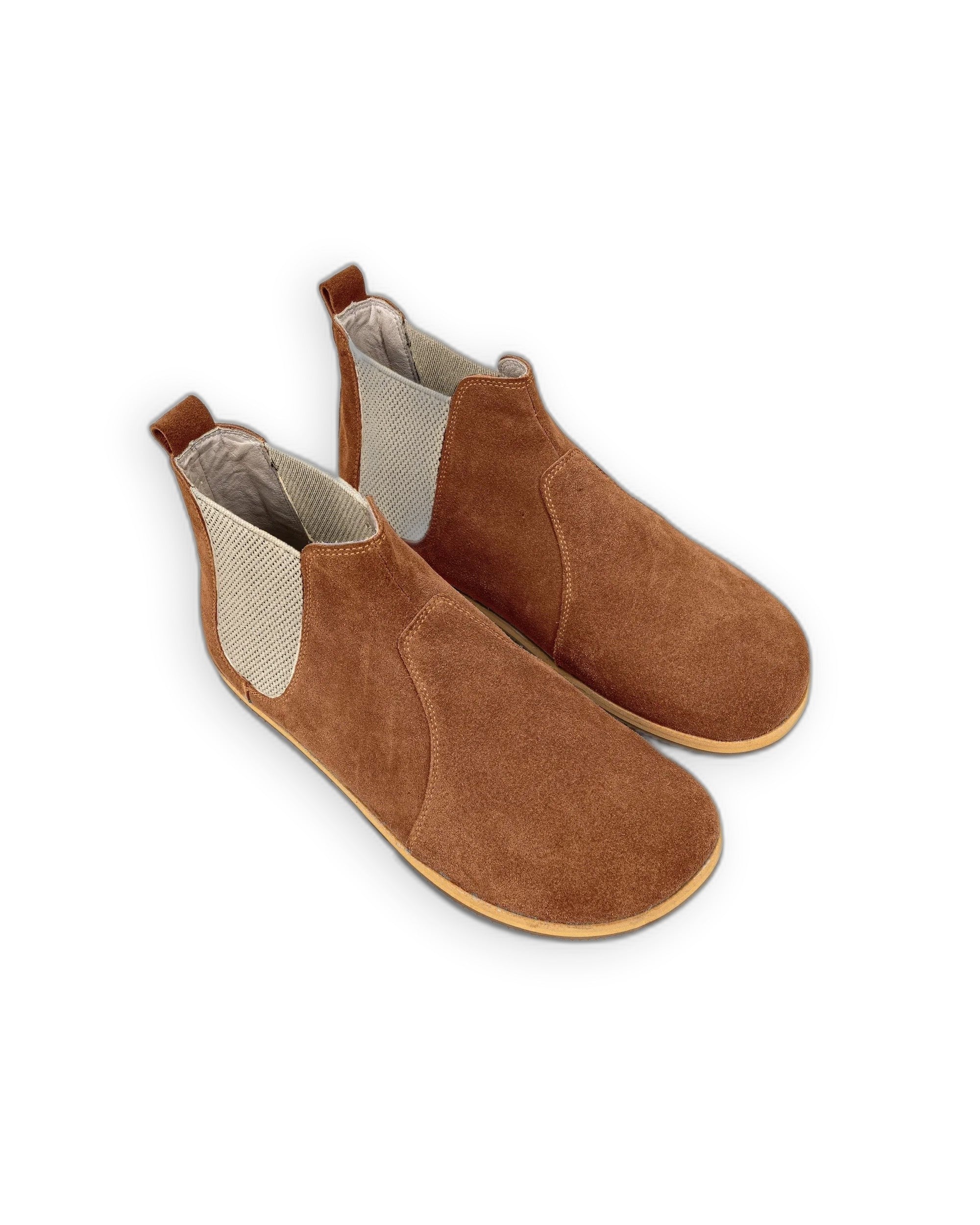
 Mens Barefoot Shoes in Brown | Flexible sole, Genuine leather Upper
View product
Mens Barefoot Shoes in Brown | Flexible sole, Genuine leather Upper
View product
Are barefoot shoes a good choice for high arches?
If you have high arches (pes cavus), you may notice pressure building at the heel and the ball of the foot. Barefoot shoes have thin soles, a wide toe box and no heel-to-toe drop, so it is fair to ask whether they suit your feet. The answer usually depends on which type of high arch you have:
- Flexible high arch: the arch is high when the foot is off the ground but lowers somewhat when you stand.
- Rigid high arch: the arch stays high and fixed whether you are sitting or standing.
A rough self-check: look at your arch while sitting, then stand with your full weight on your feet. If the arch visibly lowers, it is probably flexible; if it looks the same, it may be rigid. This is a starting point, not a diagnosis, especially if you have pain.
 Mens Barefoot Shoes in Brown | Flexible sole, Genuine leather Upper
View product
Mens Barefoot Shoes in Brown | Flexible sole, Genuine leather Upper
View product
How barefoot shoes differ from the usual advice
Conventional advice for high arches often points to well-cushioned, neutral shoes. Barefoot shoes take a different approach and keep cushioning to a minimum. Their key features:
- A wide, foot-shaped toe box so your toes can spread.
- A flexible sole that bends with your foot.
- Zero drop: heel and forefoot at the same height.
The idea is that your feet do more of the work. In one trial, walking in minimalist shoes increased foot muscle size and strength about as much as a foot exercise programme (Ridge 2019). That trial did not look at high arches specifically, and stronger muscles do not change the shape of your arch.
 Mens Barefoot Shoes in Brown | Flexible sole, Genuine leather Upper
View product
Mens Barefoot Shoes in Brown | Flexible sole, Genuine leather Upper
View product
What to consider for each arch type
Flexible high arches
People with flexible high arches are more likely to get on with barefoot shoes, because the foot still has some give. A gradual transition remains important while your muscles and tissues adapt.
Rigid high arches
If your arches are rigid, or you already have forefoot pain or ankle instability, take more care. Switching suddenly to a thin shoe increases the load on the foot: runners who moved to minimalist shoes over ten weeks showed more signs of bone stress in the foot than those who did not (Ridge 2013). Get professional advice before making a big change.
How to choose and transition
Look for shoes built on a genuinely foot-shaped last rather than a slightly wider version of a normal shoe. Our wide toe box shoes and zero drop shoes are a good place to start, and our fit guide shows how to measure.
If you use custom orthotics, barefoot shoes often have less internal volume than conventional shoes, so check that your orthotic fits before you buy, and ask your podiatrist before you stop using it.
Then build up slowly: start with an hour or two a day, add time over several weeks or months, and cut back if you feel sharp or lingering discomfort. Our transition guide has a full plan.
All Bespoky barefoot shoes are handmade to order in genuine, vegetable-tanned (chrome-free) leather in our own workshops in Gaziantep and Istanbul, drawing on a four-generation shoemaking family.
When to see a professional
This article is general information, not medical advice. See a podiatrist or physiotherapist if you have high arches and lasting pain in the heel, the ball or the outer edge of the foot, numbness, tingling or burning in your feet, frequent ankle sprains, or a recent change in your arch height or foot shape. They can tell you whether a change of footwear makes sense for you.
FAQ
Can barefoot shoes change the structure of a high arch?
No. Footwear does not change the bone structure of your feet. Minimalist shoes may strengthen foot muscles (Ridge 2019), but that is a change in muscle, not in the shape of the arch.
Do I need orthotics if I have high arches?
Not automatically. A podiatrist can tell you whether orthotics make sense for you, especially if your arches are rigid or painful.
Could zero drop shoes affect ankle stability?
It varies. If you often sprain your ankle or feel unstable, ask a professional before removing the support of your current shoes.
How should I transition with high arches?
Slowly. Start with short periods on easy surfaces, watch how your arches, Achilles and calves feel, and increase wear time gradually over weeks or months.
Sources
- Ridge ST et al. Walking in minimalist shoes is effective for strengthening foot muscles. Med Sci Sports Exerc. 2019. PubMed 30113521
- Ridge ST et al. Foot bone marrow edema after a 10-wk transition to minimalist running shoes. Med Sci Sports Exerc. 2013. PubMed 23439417
Written by Mesut Bozkurt · Updated 2 October 2026