
Inhalt
You've found the barefoot shoe you want — the shape is right, the toe box is wide enough to let your toes actually spread, the sole is thin and flexible. Then you hit the material dropdown: leather, suede, or nubuck. Suddenly you're not sure which one to pick, or whether it even matters.
It matters more than it looks like at first glance. The material changes how the shoe breaks in, how it ages, how much upkeep it needs, and even how it feels against your foot on day one. For a barefoot shoe specifically, the upper material also plays into how quickly the shoe starts to feel like "nothing's there" — which, if you're chasing that natural, unrestricted feel, is kind of the whole point. Here's a plain-English breakdown so you can choose with confidence instead of guessing.
Leather, Suede, and Nubuck: What's Actually Different?
All three usually come from the same hide — calf leather, in Bespoky's case. The difference is which side of the hide is used and how it's finished.
Leather (Full-Grain Calf)
This is the smooth, outer surface of the hide, left as close to its natural grain as possible. It's the most structured of the three: it holds its shape well, develops a gentle patina with wear, and can be wiped clean or polished in a couple of minutes. For a barefoot shoe, full-grain leather gives you the most "finished" look — it's the material you'll see on dressier oxfords and chelsea boots.
Suede
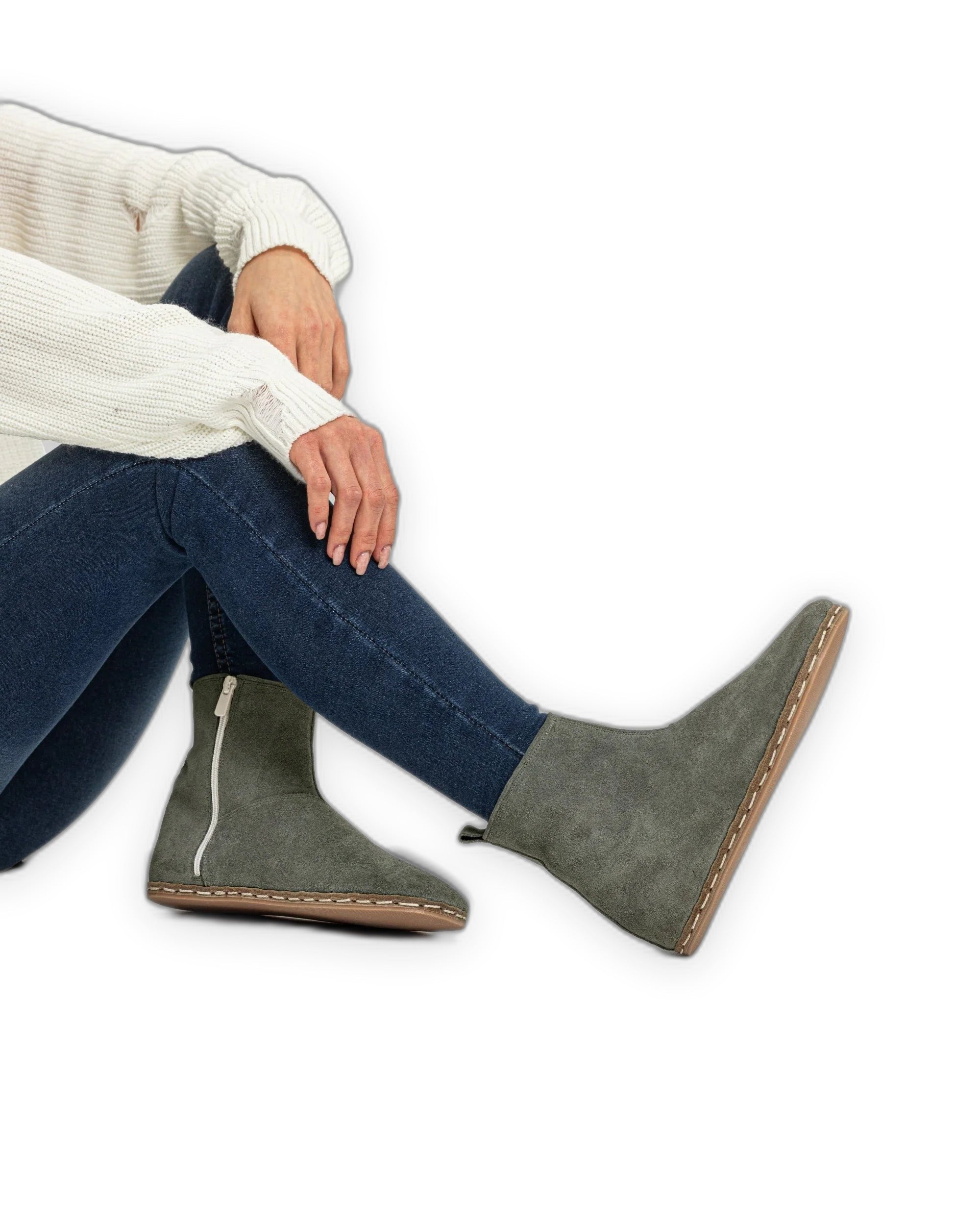
Suede is the underside of the hide, sanded to create that soft, velvety nap. It's naturally thinner and more pliable than leather, which is part of why it feels so comfortable almost immediately — there's very little break-in period. The trade-off is that suede shows water spots and scuffs more easily and needs a bit more careful handling.
Nubuck
Nubuck sits in between. It's made from the same outer grain as full-grain leather, but lightly sanded to create a short, dense nap that feels similar to suede. Because it's built from the tougher outer layer of the hide, nubuck tends to hold up to daily wear a little better than suede while still giving you that soft, matte look.
You'll actually see nubuck pop up more than once in Bespoky's lineup beyond everyday oxfords and boots — it's one of the finishes used on our Turkish Yemeni shoes, where that soft, matte texture suits the traditional silhouette well.
Durability, Water Resistance & Breathability at a Glance
| Material | Durability | Water Resistance | Break-In Time | Look |
|---|---|---|---|---|
| Leather | Highest — ages well, resists scuffs | Best (especially when conditioned) | Moderate — softens with wear | Smooth, polishable, classic |
| Nubuck | Good — more resilient than suede | Moderate — needs a protector spray | Short — soft from day one | Matte, textured, casual-smart |
| Suede | Good with care — shows wear sooner | Lowest — avoid heavy rain/snow | Shortest — immediately soft | Velvety, relaxed, casual |
None of these is "the best" material in an absolute sense — they're best for different situations. That's really the question to ask yourself: what will these shoes actually be doing most days?
Which One Fits Your Barefoot Lifestyle?
Choose Leather If...
You want one pair that can go from a weekday commute to a dinner out, and you don't mind a short break-in period in exchange for a shoe that looks sharper over time rather than more worn. Leather is also the easier choice if you're commonly caught in rain or need to wipe shoes down quickly before walking out the door. It's the natural pick for our barefoot oxford shoes and anything meant to read as dressier.
Choose Suede If...
Comfort from the first wear matters more to you than low-maintenance durability. Suede is wonderful for everyday, dry-climate wear — loafers, sneakers, casual boots — where you want that soft, broken-in feel without actually having to break anything in. Just plan to keep it away from puddles and slush.
Choose Nubuck If...
You want the relaxed, matte texture of suede but with a bit more resistance to daily scuffing — think everyday boots or oxfords you'll wear often and don't want to baby. It's the "low-maintenance casual" middle ground between the other two.
Climate is worth a thought too. If you live somewhere genuinely humid or rainy for most of the year, leaning toward leather (or saving suede/nubuck for drier months) will save you some frustration. If you're mostly indoors, in a dry climate, or just want the softest possible everyday pair, suede and nubuck have the edge.
And if you're still unsure, it's worth reading how Bespoky sources and treats its hides in the first place: our calf vs. buffalo leather breakdown explains why calf leather is the base for all three finishes above, and why that choice affects flexibility — which matters a lot for a barefoot sole.
Caring for Each Material
Leather is the simplest to maintain day-to-day: a soft cloth, an occasional conditioning balm, and you're set. Suede and nubuck both benefit from a dedicated suede brush to lift dirt and restore the nap, plus a water-and-stain protector spray applied before the first wear (and reapplied every few months if you wear them often). Avoid machine cleaning or soaking any of the three — barefoot soles are glued and stitched for flexibility, not for sitting in water. For a deeper routine, our full leather care guide covers conditioning, storage, and what to do if your shoes get caught in the rain.
Frequently Asked Questions
Is nubuck more durable than suede?
Generally, yes. Because nubuck is sanded from the tougher outer (grain) layer of the hide rather than the softer underside, it tends to resist scuffs and daily wear slightly better than suede, even though the two look and feel similar.
Can suede or nubuck barefoot shoes get wet?
Light drizzle is usually fine, especially with a protector spray applied beforehand. Heavy rain, snow, or standing water isn't a good match for either material — if you know you'll be walking in wet conditions regularly, full-grain leather (or a dedicated winter boot) is the safer choice.
Which material should a beginner start with?
If you're new to barefoot shoes and still getting used to the feel of a wide toe box and zero-drop sole, suede or nubuck can make that transition more comfortable since there's almost no material break-in to think about on top of it. Leather is just as good a starting point if you prefer a more structured, classic look and don't mind a short settling-in period.
Does the material affect how flexible the sole feels?
Not directly — the sole's flexibility comes from the sole construction itself, not the upper material. But a softer upper (suede, nubuck) can make the whole shoe feel more relaxed and "broken-in" sooner, which some people associate with a more natural, barefoot-like fit.
Do suede and nubuck crease differently than leather?
Yes, slightly. Full-grain leather tends to show sharper, more defined creases as it bends with your foot, which is part of how it develops character over time. Suede and nubuck crease more softly since the nap hides the fold lines — so if you'd rather your shoes look consistently "new" for longer with minimal visible creasing, that's another point in their favor.
Whichever material you land on, the goal is the same: a shoe that lets your foot move the way it's supposed to. Browse our leather, suede, and nubuck barefoot collections to see the full range in each finish, or start with a style you already have in mind and compare the material options on that product page.