
المحتويات
If you’ve ever stood over a putt in a pair of thin-soled shoes and noticed how much more you could feel the slope under your feet, you’ve already brushed up against the idea behind barefoot golf shoes. It’s a small but growing question in golf forums and comfort-footwear circles alike: can a zero-drop, wide-toe-box shoe — the kind built for everyday barefoot wear — actually hold up on the course, and does it change anything about how you swing?
We’re not a golf-specific brand, and we won’t pretend ground feel is going to fix your slice. But the mechanics behind barefoot shoes do overlap with a few things golfers already care about: a stable base, an even stance, and feet that aren’t fighting their shoes all round long. Here’s what’s actually true, what isn’t, and what to weigh before you tee off in something minimalist.
What Actually Makes a Shoe “Barefoot”?
Three things, mostly. A zero-drop sole keeps your heel and forefoot at the same height, instead of propping your heel up the way most athletic and dress shoes do. A wide toe box lets your toes spread naturally under load, which matters a lot when you’re shifting weight through a swing. And a thin, flexible outsole lets your foot sense the ground — firm fairway, soft rough, uneven lie — instead of muffling it under foam.
None of that is golf-specific. It’s the same logic that makes barefoot shoes popular for walking, standing all day, or everyday wear. Golf is just one more place where feet spend hours doing real work, which is exactly why the question keeps coming up.
Why Golfers Are Starting to Notice Ground Feel
A golf swing is a weight-transfer exercise as much as anything — load into the trail foot on the backswing, shift into the lead foot through impact. Your feet are the only part of your body actually in contact with the ground while that happens, and a thick, stiff, elevated-heel shoe sole changes how well you can sense and react to that shift, especially on a side-hill or sloped lie.
This is the same principle that’s made a handful of dedicated minimalist golf shoe lines pop up over the past few years — not a fringe idea anymore, but still a small, deliberate niche rather than the mainstream choice. The appeal is consistent: more sensory feedback from the ground, a flatter and more neutral stance, and less shoe actively working against your feet.
Stability, Balance, and Your Swing
A wide toe box gives your toes room to splay and grip the ground on the downswing, which is part of why we also talk about wide-toe shoes in the context of balance and fall prevention — the same wider base of support that helps someone stay steady on uneven ground also helps a golfer stay planted through rotation. And because zero-drop shoes keep your weight centered over a flat foot instead of tipped forward onto your toes, a lot of players describe their stance feeling more “neutral” the first few rounds they try it.
We’d stop short of promising a straighter drive, though. Swing mechanics are personal, and a shoe change interacts with years of habit, not just your feet. If you’re working with a coach on anything related to your stance, base, or weight transfer, it’s worth mentioning the shoe switch — it’s a real variable, just not a magic one. If ankle stability on uneven lies is your main concern, our guide on barefoot shoes and ankle stability covers that piece in more depth.
Where Barefoot Shoes Fall Short on the Course
Here’s the honest part. Most barefoot shoes, ours included, are built for everyday wear and walking, not for a wet, sloped fairway. They don’t have soft spikes or the aggressive traction pattern that a dedicated golf shoe has, so on a dewy morning round or a hilly course, you can lose grip that a cleated shoe wouldn’t. They also won’t match the weatherproofing of a purpose-built golf shoe, so a wet course is going to mean wet feet faster.
That doesn’t rule barefoot shoes out — it just narrows where they make the most sense: dry conditions, flatter courses, the driving range, an indoor simulator, or a casual nine where traction isn’t a serious concern. For a wet, hilly 18 in spike-required conditions, a proper golf shoe is still the safer call.
What to Look for If You’re Going to Try It
- A wide, round toe box — your toes need to spread as you load into each step, not get squeezed into a pointed last.
- A flexible but durable sole — thin enough for ground feel, tough enough to survive a few rounds of walking rough and cart paths.
- A snug, low-volume fit through the midfoot — a shoe that’s loose will undercut the stability you’re trying to gain.
- Breathable, quick-drying material — you’re going to sweat through 18 holes regardless of sole thickness.
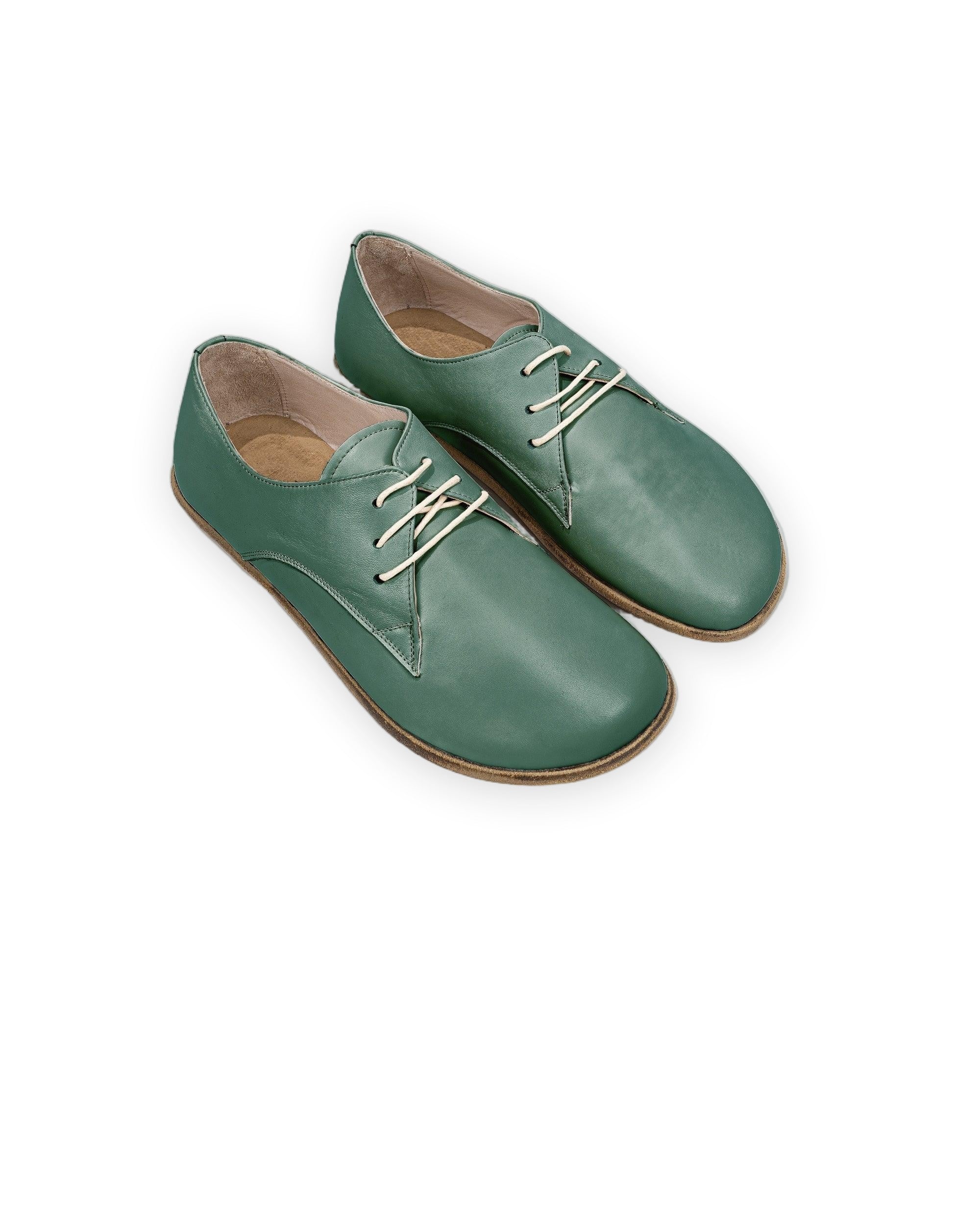
Our men’s barefoot shoes and women’s barefoot shoes collections both lean toward leather sneaker and oxford-style builds with a true wide toe box and a flexible sole — closer to what you’d want for a dry-weather round or practice session than a formal boot would be.
| Feature | Traditional Golf Shoe | Barefoot / Minimalist Shoe |
|---|---|---|
| Heel height | Raised (6–12mm drop typical) | Zero drop, flat |
| Toe box | Often tapered | Wide, foot-shaped |
| Traction | Spikes or aggressive lugs | Minimal, flat outsole |
| Ground feel | Low | High |
| Best conditions | Wet, hilly, competitive rounds | Dry, flat, casual rounds, range, simulator |
Easing Into It Without Wrecking Your Round
If you’re already comfortable in barefoot shoes day to day, carrying that over to a casual round is a small step. If you’re new to zero-drop footwear altogether, don’t debut it on a tournament day. Wear them walking and standing for a couple of weeks first, then try a practice session or a relaxed nine before you trust them for 18. Your calves and feet are doing more stabilizing work than they’re used to, and that adjustment is real, even if it’s short-lived.
Frequently Asked Questions
Can you wear barefoot shoes to play golf?
Yes, on courses that don’t strictly require spiked shoes — most public and casual courses are fine with a clean, flat-soled sneaker. Call ahead if you’re playing somewhere more formal, since some private clubs do enforce traditional golf shoe or soft-spike policies.
Do barefoot shoes actually help your swing?
They can improve ground feel and give you a flatter, more neutral stance, which some golfers feel translates into steadier weight transfer. They’re not a substitute for swing instruction, and the effect varies a lot by player.
What’s the main downside of barefoot shoes on the course?
Traction and water resistance. Without spikes, you can lose grip on wet grass or slopes, and most barefoot shoes aren’t built to keep your feet dry through a damp round.
Are barefoot shoes allowed at golf courses?
Generally yes at public and semi-private courses, as long as the shoe is clean and flat-soled. Some private clubs still require soft spikes, so it’s worth checking the dress code before you show up.
Curious whether barefoot footwear fits the rest of your week too, on and off the course? Browse our men’s and women’s barefoot shoe collections and start with a pair built for everyday walking — the course can come second.