
المحتويات
What Actually Wears Out First
Barefoot shoes don't fail all at once. Long before a pair looks "done," one part of it usually gives out first — and knowing which part tells you a lot about how much life you have left.
The outsole takes the brunt of it. Because barefoot shoes have thin, flexible soles by design, the rubber compound wears faster than a thick, cushioned traditional sole would. You'll usually see the first flattening under the ball of the foot and the heel strike zone — the two spots that touch down hardest with every step.
The upper ages differently depending on material. Full-grain leather creases, softens, and develops a patina, but it rarely tears if it's genuine leather stitched well. Knit or mesh uppers stretch out sooner and can start separating at the seams, especially around the toe box where barefoot shoes flex the most.
The insole or footbed is the quiet one. It compresses gradually, and because barefoot shoes don't rely on foam cushioning to begin with, a flattened insole is easy to miss until you notice your feet feel more tired at the end of the day than they used to.
So How Long Should a Pair Actually Last?
There's no single answer, because "how you wear them" matters more than "how long you've owned them." Here's a realistic range based on use:
| How you wear them | Typical lifespan |
|---|---|
| Occasional / weekend wear | 2–3 years |
| Daily walking or commuting | 12–18 months |
| Regular running or training | 300–500 miles (roughly 4–8 months for most runners) |
| Hiking or rough terrain | 6–12 months, depending on trail conditions |
Quality of construction shifts these numbers too. A well-made pair with a genuine leather upper and a solid stitched or glued sole will consistently outlast a cheaper synthetic pair, sometimes by years rather than months.
5 Signs It's Time to Retire Them
You don't need to guess. These are the tells that matter more than the calendar:
- The tread is smooth or uneven. If you can't feel any texture left on the outsole, or one side is visibly more worn than the other, grip and stability are already compromised.
- The midsole or footbed feels hard or dead. Press your thumb into it. If it doesn't give at all, whatever ground-feel cushioning it had is gone.
- The upper is cracking or separating at the seams. A small crease is normal wear. A crack that runs through the material, or stitching that's pulling loose, is structural failure.
- Your feet feel different after wearing them. New aches, more fatigue, or a change in how your foot sits inside the shoe usually means the shape has broken down.
- You've hit the mileage range for how you use them (see the table above), even if they still look fine from a distance. Wear you can't see is still wear.
Getting More Life Out of Every Pair
A few habits genuinely extend how long barefoot shoes hold up:
- Rotate two pairs if you wear barefoot shoes daily. Letting the footbed and midsole fully dry and decompress between wears slows down compression significantly.
- Condition leather uppers every few months with a proper leather balm, especially if you're in a dry or wet climate. Leather that stays supple resists cracking far longer than leather left to dry out.
- Clean debris out regularly, particularly if you hike or walk on gravel. Small stones and grit work their way into stitching and accelerate wear from the inside.
- Air-dry, never force-dry. Heat sources (radiators, direct sun, dryers) break down both leather and adhesive bonds much faster than a day of air drying.
Does Better Leather Actually Mean Longer Life?
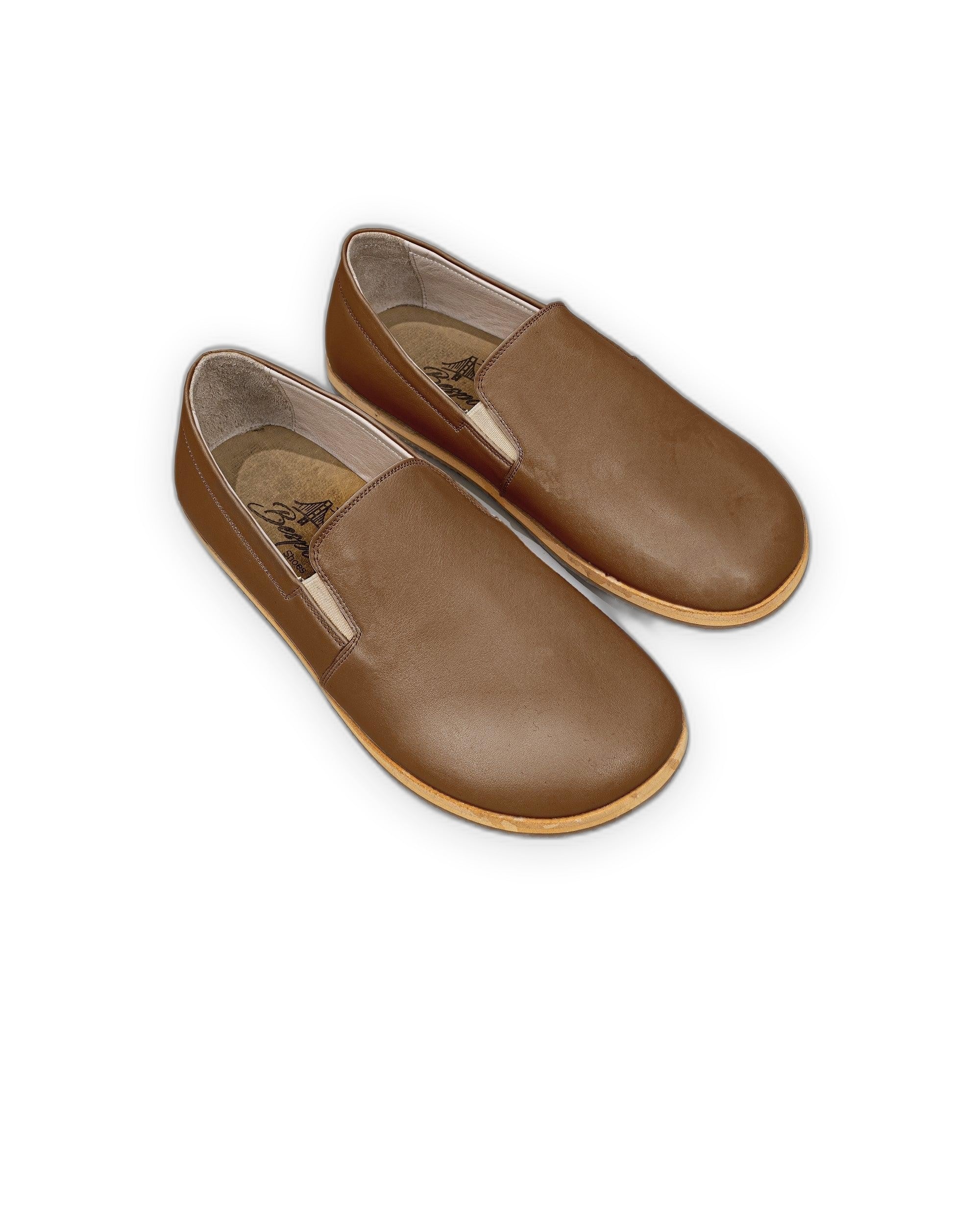
Yes, and it's not just marketing. Full-grain leather is the outer layer of the hide with the natural fiber structure intact, which makes it denser and more resistant to tearing than corrected or bonded leather. It's also part of why handcrafted leather barefoot shoes tend to still look and perform well years after synthetic alternatives have broken down. If you're comparing options, the construction — stitching, sole attachment, leather grade — tells you more about lifespan than the price tag alone.
Frequently Asked Questions
How long do barefoot shoes last compared to regular shoes?
Roughly similar in calendar time, but the wear shows up differently. Regular shoes lose cushioning; barefoot shoes lose sole flexibility and tread first, since there's less material to begin with.
Do barefoot shoes wear out faster than traditional shoes?
Not necessarily faster — differently. The thin sole means tread wear is more visible sooner, but a quality upper (especially leather) often outlasts the synthetic uppers found on many cushioned shoes.
Does climate affect how long barefoot shoes last?
Yes. Heat and humidity accelerate adhesive breakdown and leather drying, while cold, dry air can make leather stiff and prone to cracking if it isn't conditioned.
If your current pair is showing any of the signs above, it might be time to look at what's next. Browse men's barefoot shoes, women's barefoot shoes, or barefoot boots built with full-grain leather and construction meant to hold up to daily wear. And if you're newer to the barefoot world, our guide on transitioning to barefoot shoes is a good next stop.